


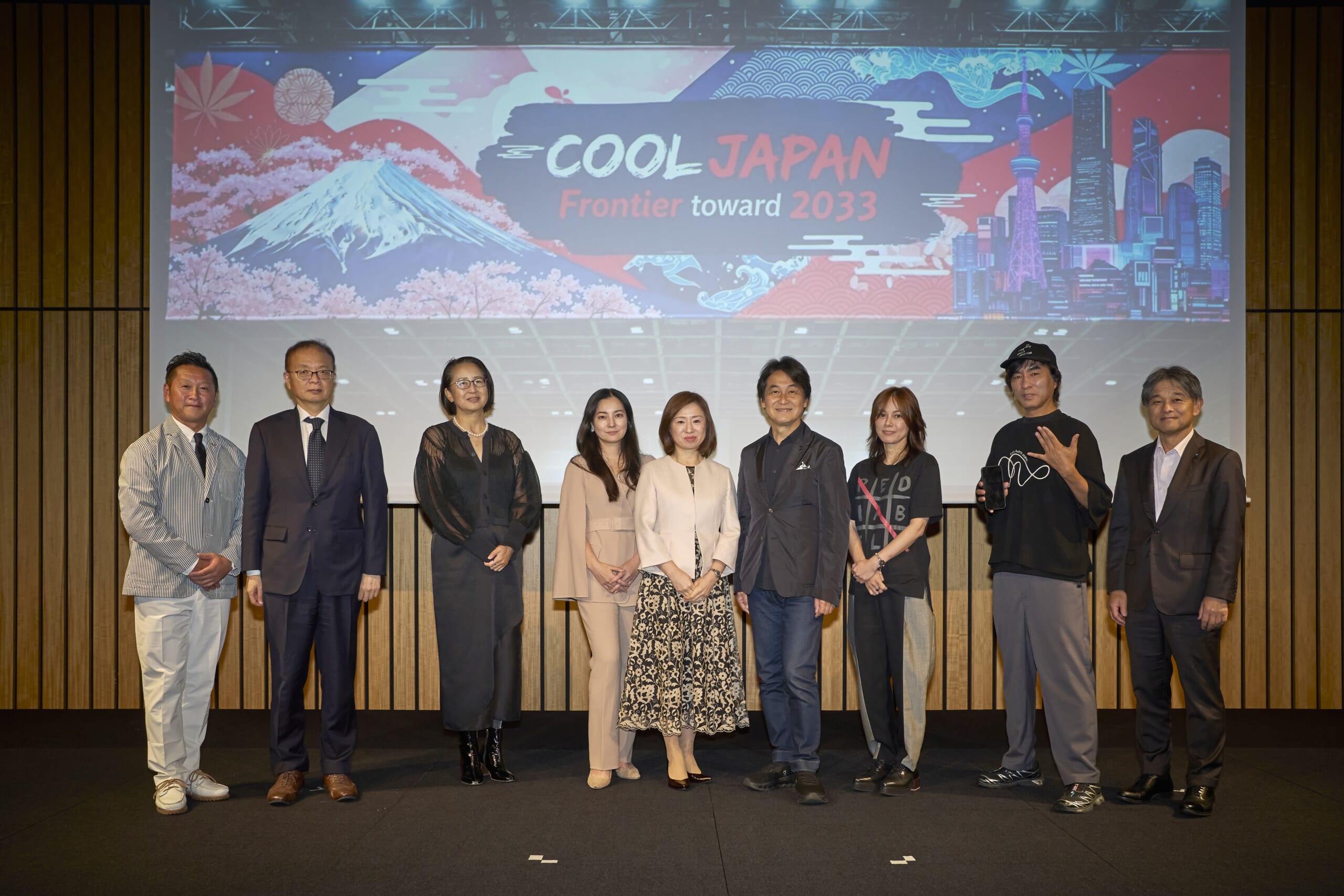
The Cool Japan Public-Private Partnership Platform of the Cabinet Office of Japan held “Cool Japan Frontier toward 2033” on Friday, October 3, 2025, at the Akasaka Intercity Conference in Tameike-Sannō, Tokyo. Messages looking ahead to 2033 were delivered by Minoru Kiuchi, Minister of State for “Cool Japan” Strategy, as well as Tsuyoshi Natsuno and Risa Tanaka, co-chairs of CJPF. The event also provided opportunities for networking among participants.
Please note that the contents of this article reflect information available at the time of the event.
Chapter.01. Message from Minister of State for “Cool Japan” Strategy
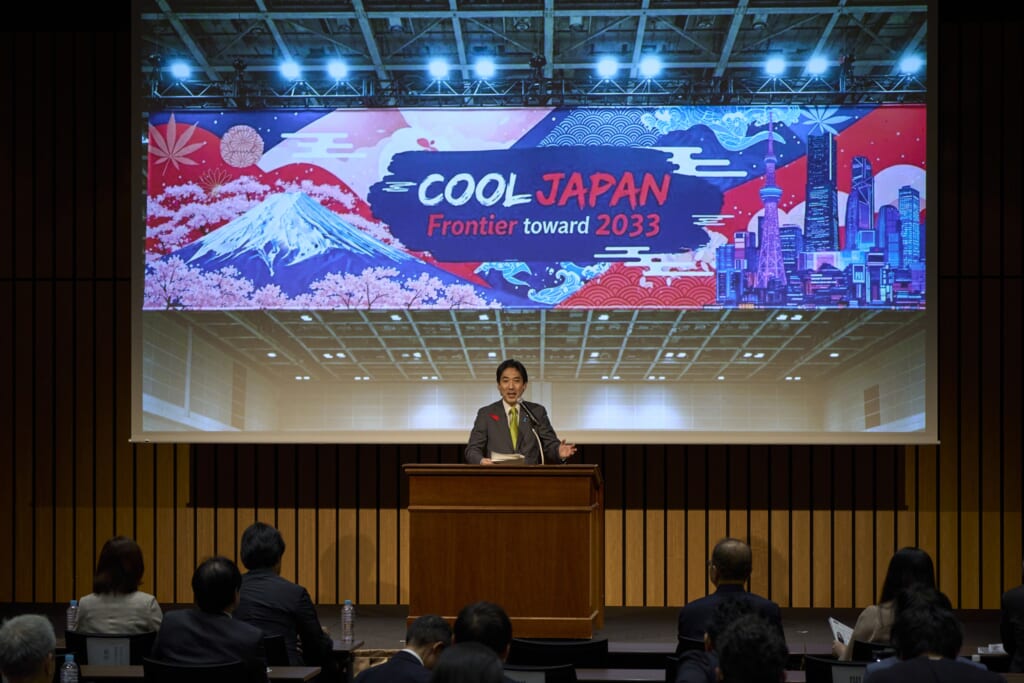
Minoru Kiuchi, Minister of State for “Cool Japan” Strategy, emphasized that Cool Japan initiatives span a wide range of fields—including content, food, inbound tourism consumption, fashion, and cosmetics—and involve a diverse range of stakeholders, making cross-sectoral and organic collaboration essential. He also noted that the Cool Japan Public-Private Partnership Platform, established in 2015, has been relaunched this year under a new organizational structure. He expressed his appreciation for the leadership of co-chairs Tsuyoshi Natsuno and Risa Tanaka, as well as for the participation of the Executive Directors.
Referring to the Intellectual Property Strategic Program 2025, Minister Kiuchi stated that the initiative aims to leverage regional resources—such as local food culture and traditional culture connected to content IP—to accelerate integrated regional efforts, thereby creating a positive cycle between the growth of the content industry and the revitalization of local economies.
He concluded his remarks by reaffirming the commitment to further promoting the Cool Japan strategy to audiences around the world.
Chapter.02.
Messages from the Co-Chairs and Executive Directors
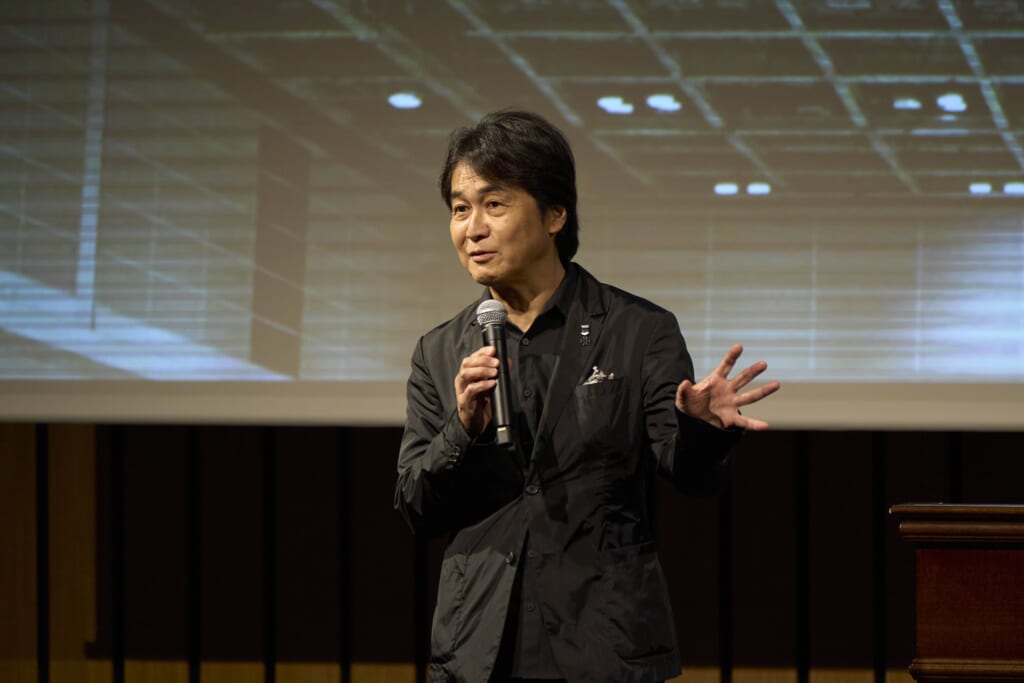
Tsuyoshi Natsuno, Co-Chair, Cool Japan Public-Private Partnership Platform Specially Invited Professor and Director of Cyber Informatics Research Institute, Kindai University, stated that Japan’s content industries—including manga, anime, and video games—have experienced remarkable global growth following the COVID-19 pandemic. He noted that export revenues in the previous fiscal year reached ¥5.8 trillion, surpassing both the semiconductor and steel industries to become Japan’s second-largest export industry after automobiles.
Looking ahead to 2033, he explained that the goal is for the overall Cool Japan industry to grow into a ¥50 trillion market, with the content industry accounting for ¥20 trillion of that total. He emphasized that this would exceed the scale of Japan’s ¥20 trillion automotive industry, opening the way for content to become one of the country’s core industries.
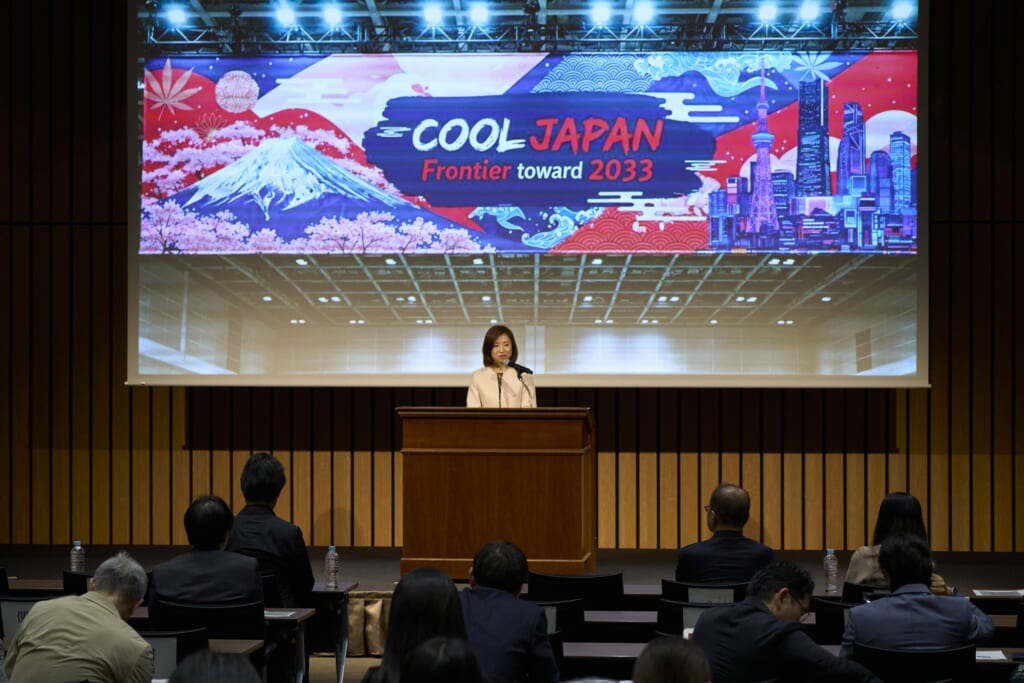
Risa Tanaka, Co-Chair, Cool Japan Public-Private Partnership Platform President, The Graduate school of Project Design, presented two major themes.
First, she highlighted the goal of expanding the overseas market size of the Cool Japan industry to ¥50 trillion by 2033, while also increasing global favorability toward Japan by 10 percentage points. Second, she emphasized the importance of sharing knowledge and expertise and creating opportunities for collaboration in order to stimulate cross-industry initiatives across related sectors.
She also introduced examples in which content-driven regional revitalization has generated positive economic cycles and led to successful high-value inbound tourism strategies. According to Ms. Tanaka, these initiatives are becoming a driving force in strengthening Japan’s soft power.
Click here for messages from the Executive Directors.
Chapter.03.
Initiatives for Expanding the Global Presence of the Fashion and Cosmetics Industries Moving Forward
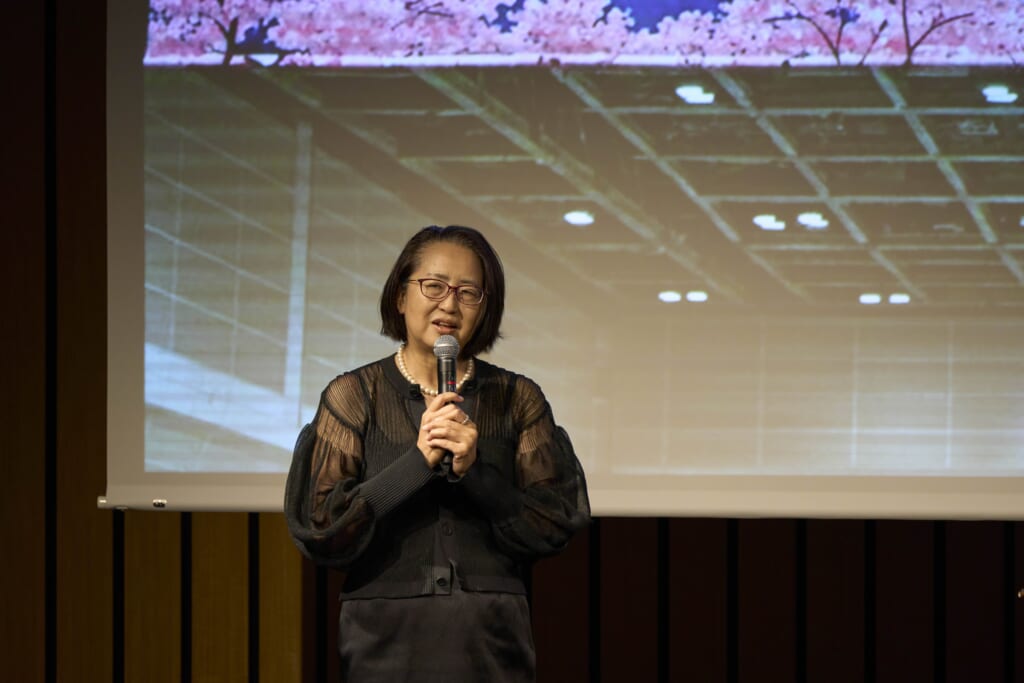
Ayumi Gunji, editor and fashion creative director, reflected on the frustration she once felt that Japanese fashion culture, although recognized overseas, was not being fully appreciated. Through her participation in the Ministry of Economy, Trade and Industry’s Fashion Future Study Group, she has worked to support the development of Japan’s fashion industry.
She explained that while the Japanese fashion industry is currently attracting significant international attention and presents major opportunities, there remains a challenge in that the necessary platforms and infrastructure have not yet been fully established. She concluded by expressing her intention to further deepen discussions on this issue moving forward.
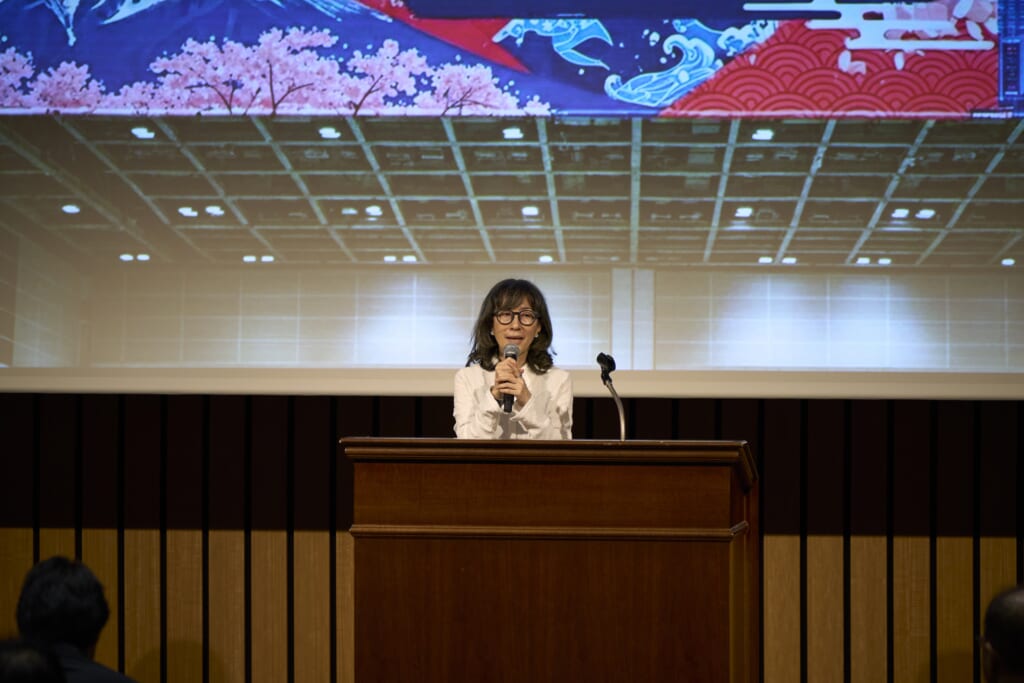
Kikuko Yano, Editor-in-Chief of BeautyTech.jp at istyle Inc., introduced @cosme as a platform that operates a review website, physical retail stores, and online shopping services. She explained that @cosme is Japan’s first cross-brand beauty retail concept where customers can try a wide range of products—from luxury department-store cosmetics to affordable “drugstore beauty” items—all in one location.
She reported that inbound tourism has recently driven a significant increase in store visitors, reflecting growing international interest in J-Beauty year after year. She also announced plans to open a flagship store in Hong Kong within the year, with the aim of sharing both the appeal of @cosme and the strengths of J-Beauty with overseas customers.
Ms. Yano also explained that the media platform she oversees focuses on innovation in the beauty industry and disseminates information on trends including those of international brands. She expressed her intention to further discuss strategies for strengthening the global presence of J-Beauty in the years ahead.
Chapter.04.
Message from the Intellectual Property Strategy Promotion Secretariat, Cabinet Office of Japan
Chapter.05.
Panel Session
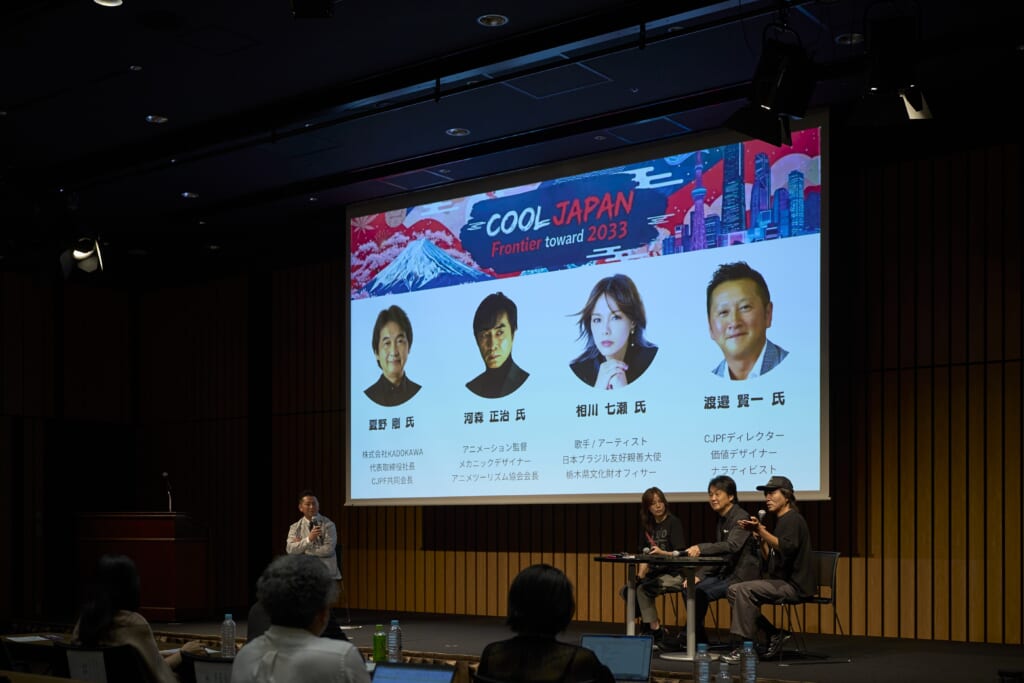
At Cool Japan Frontier toward 2033, Shoji Kawamori, animation director; Tsuyoshi Natsuno, Director and Representative Executive Officer, CEO of KADOKAWA Corporation; and Nanase Aikawa singer-songwriter, participated in a panel discussion moderated by Kenichi Watanabe, Director of the Cool Japan Public-Private Partnership Platform. The panel featured lively discussions on the current state and future of Japan’s content industry.
The Source of Japan’s Creative Power in Content
Mr. Kawamori explained that one of the foundations behind Japan becoming a global leader in animation and manga lies in the country’s unique cultural sensibility, symbolized by the concept of “Yaoyorozu no Kami” (the belief that countless gods or spirits reside in all things). He noted that Japan’s animistic worldview and its cultural acceptance of diversity—distinct from Western rationalism—have fostered an environment where even stones, clouds, and water are perceived as having souls. According to Mr. Kawamori, this uniquely Japanese sensibility serves as the source of the extraordinary diversity of characters found in Japanese content, and overseas creators often praise Japan as being unparalleled in its ability to create unique characters.
Japanese Content Loved Around the World
Mr. Natsuno pointed out that Japanese people themselves need to recognize the extent to which Japanese manga has spread globally, noting that bookstores around the world now feature large-scale Japanese manga sections. He emphasized that content exports have grown into a ¥5.8 trillion industry, surpassing semiconductors and steel to become Japan’s second-largest export industry after automobiles. At his own company, around 10% of new employees are now non-Japanese, many of whom say they “learned Japanese through anime.”
Ms. Aikawa shared her experiences in Brazil, explaining that her debut song has continued to be danced at Bon Odori festivals there for more than 25 years, with choreography spreading nationwide through social media. She remarked, “Japanese people do not realize how deeply their culture is loved around the world,” emphasizing the importance of Japanese people themselves having greater confidence in their own culture.
Looking Ahead to 2033
The new Cool Japan strategy aims to grow the industry into a ¥50 trillion market by 2033, with the content industry alone targeting ¥20 trillion.
The panelists shared the view that Japan’s creators possess a rare ability to generate diverse forms of content—including music, anime, and manga—and that Japanese culture itself serves as a powerful and unique asset that can continue to lead the world. At the same time, the discussion emphasized that achieving the true vision of Cool Japan will require Japanese people to take pride in their own culture and to further incorporate the country’s strengths in diversity into social systems and education, areas where its potential has not yet been fully realized.
Networking Reception
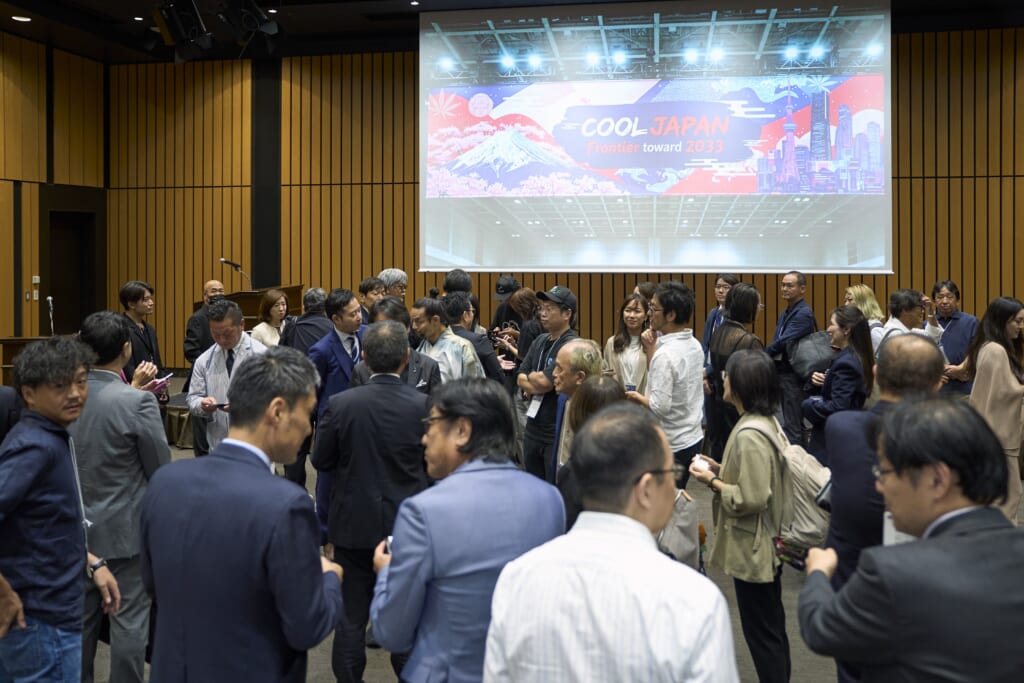
Following the presentations, a networking reception was held to provide an opportunity for speakers and participants to deepen their connections. Through this reception, participants from a wide range of industries actively expanded their networks, fostering new collaborations and generating ideas to further promote Cool Japan initiatives.
Date: October 3, 2025
Please note that the contents of this article reflect information available at the time of the event.