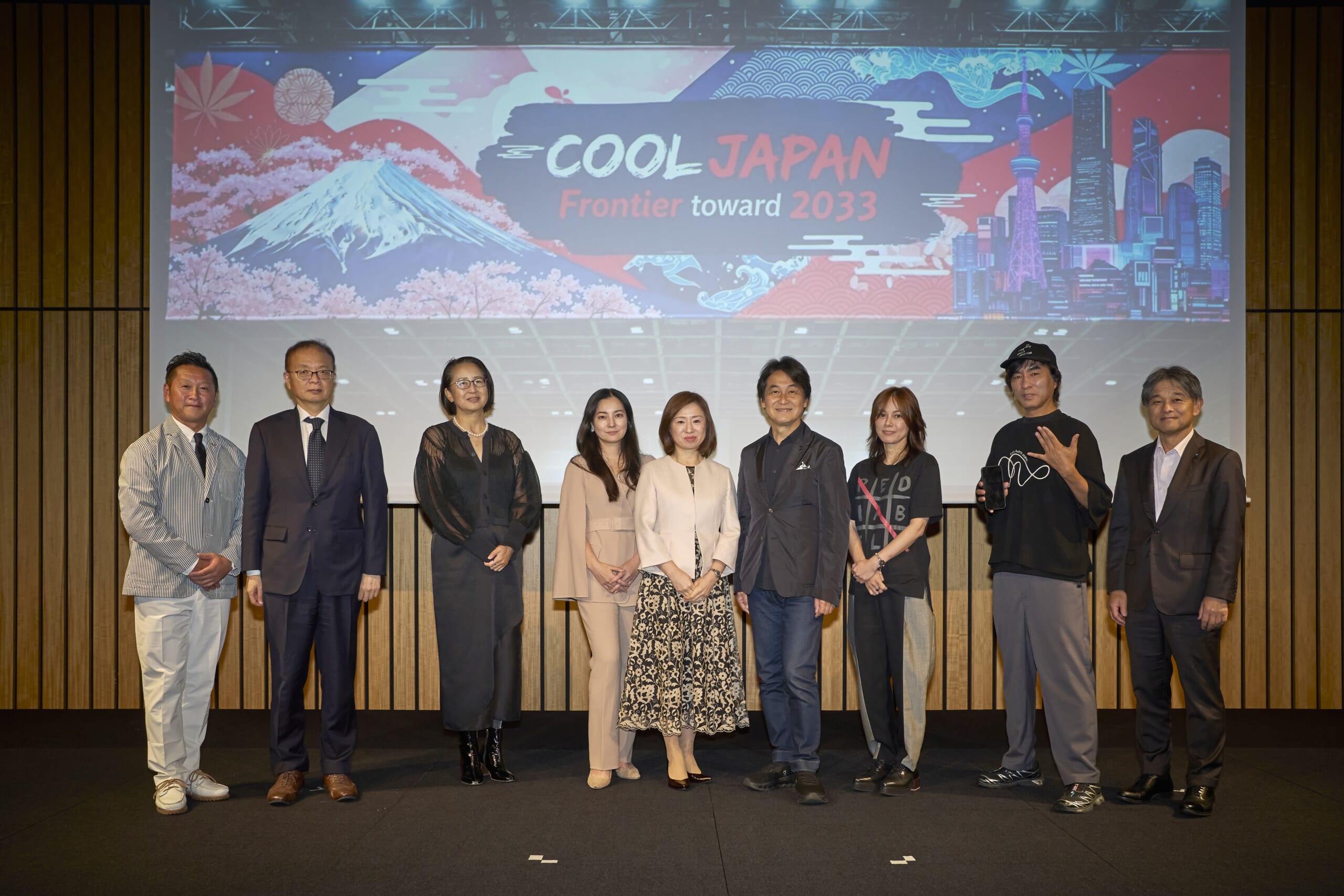



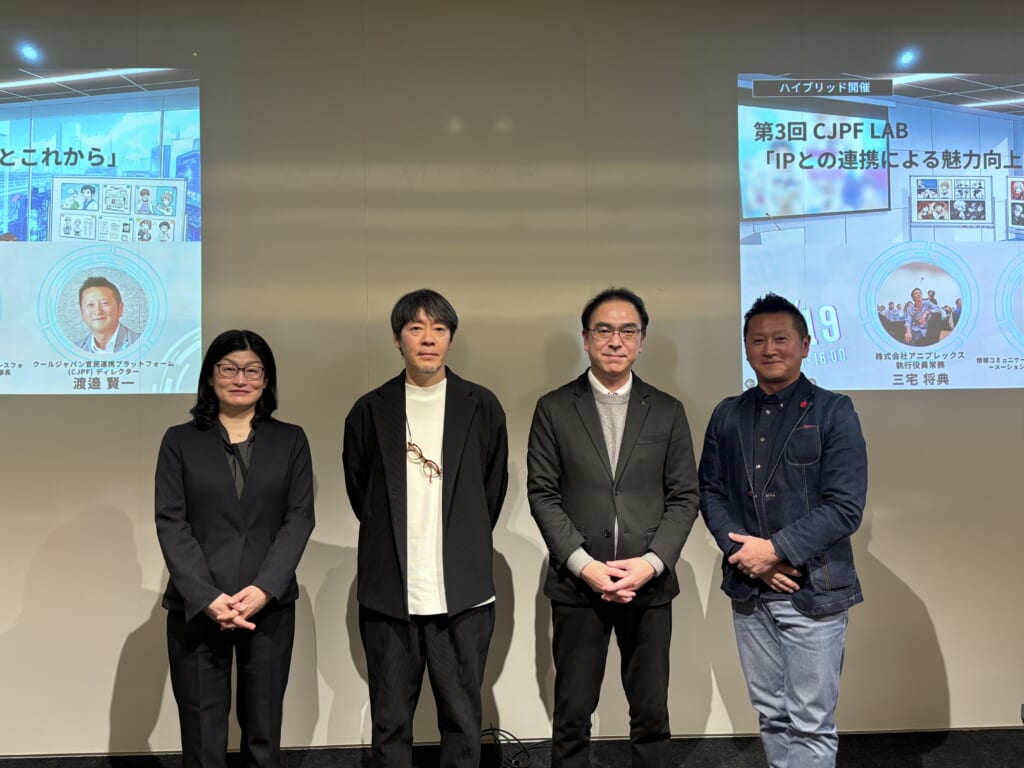
The third CJPF LAB session of FY2025, which received a record-high approximately 300 applications, welcomed guest speakers from Aniplex Inc., a company engaged in IP business development, and TOPPAN Inc., which serves as a bridge connecting IP with diverse industries. The event provided valuable presentations from each company’s perspective, offering insights into expanding initiatives that enhance value through collaboration between Japanese content and other industries.
(Date: December 19, 2025)
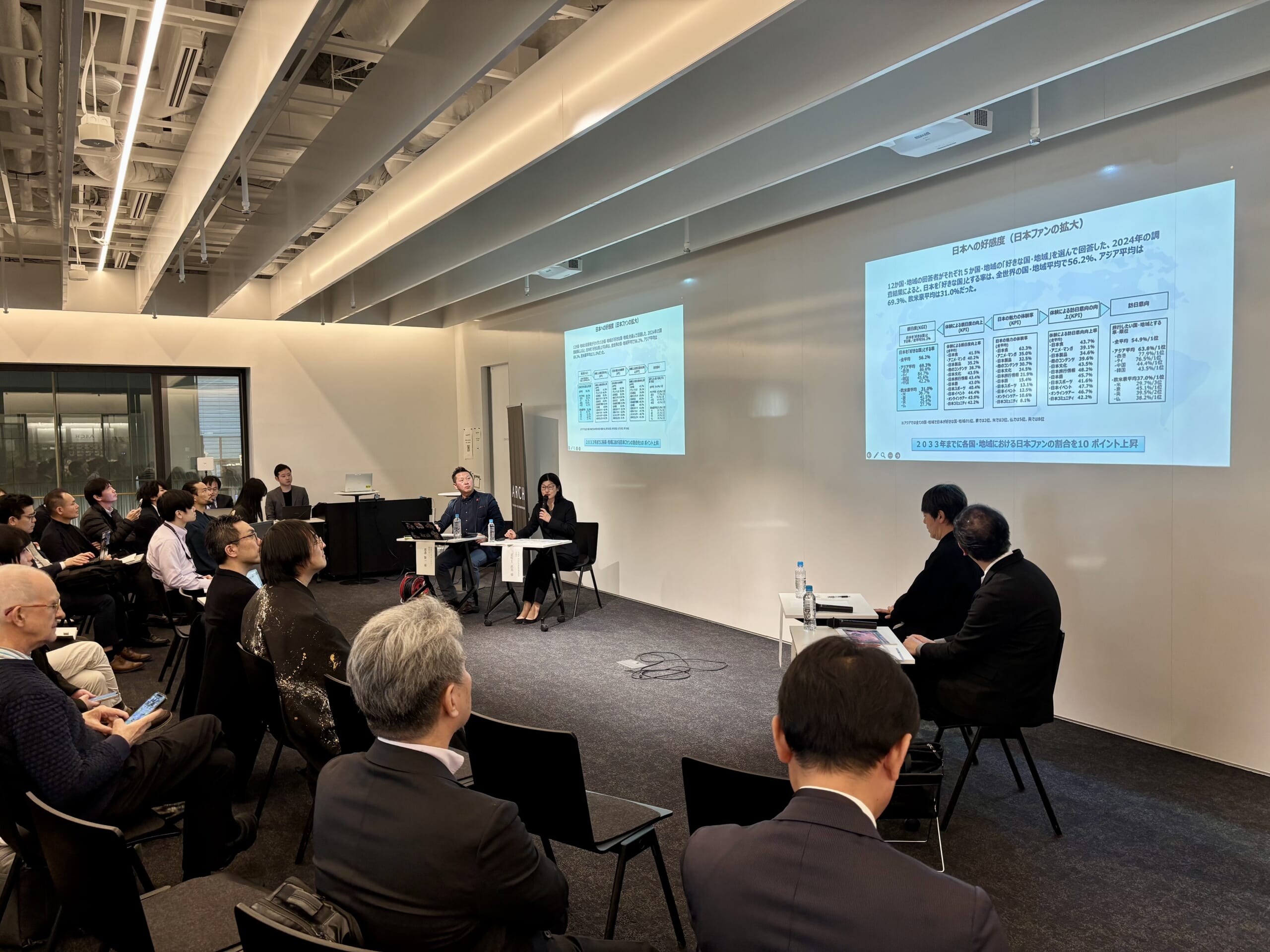
Masanori Miyake, Senior Executive Officer of Aniplex Inc., delivered a presentation on “The History of Japanese Television Anime and the Evolution of Merchandising Business.”
Mr. Miyake explained the historical process through which anime, once regarded as a subculture, has evolved into one of Japan’s core industries. He noted that in the early days of television broadcasting, which began in 1953, individual programs were typically sponsored by a single company, and “kids and family programs” were developed primarily for children.
He described how anime merchandising began with so-called “character-branded products,” featuring characters from works such as Astro Boy on packaging. This later evolved into role-play merchandise such as magical girl compacts and transformation belts from Kamen Rider, followed by realistic reproductions of in-story items such as the Chogokin figures from Mazinger Z and model kits from Mobile Suit Gundam. He further explained that the market eventually expanded into “hobby anime” franchises such as Beyblade.
Mr. Miyake also highlighted Space Battleship Yamato (1977) as a turning point that transformed anime from children’s entertainment into content capable of appealing to adult audiences. This shift, he explained, led to the emergence of anime fandom culture, otaku culture, dōjinshi, OVAs, and late-night anime as entirely new markets.
Using Demon Slayer: Kimetsu no Yaiba as an example, he described how a series that originally began as a late-night anime became a nationwide phenomenon embraced not only by core anime fans but also by children and mainstream audiences. He attributed this to factors such as the rise of streaming platforms and the unique social circumstances of the COVID-19 pandemic.
Mr. Miyake concluded by noting that, as the scale of the anime business has expanded, collaborations have rapidly increased not only with traditional anime-related companies but also with major national brands. At the same time, he pointed out new challenges brought about by the mainstreaming of anime business, including operational efficiency, production capacity, and aligning different companies’ levels of understanding of individual works and IP.
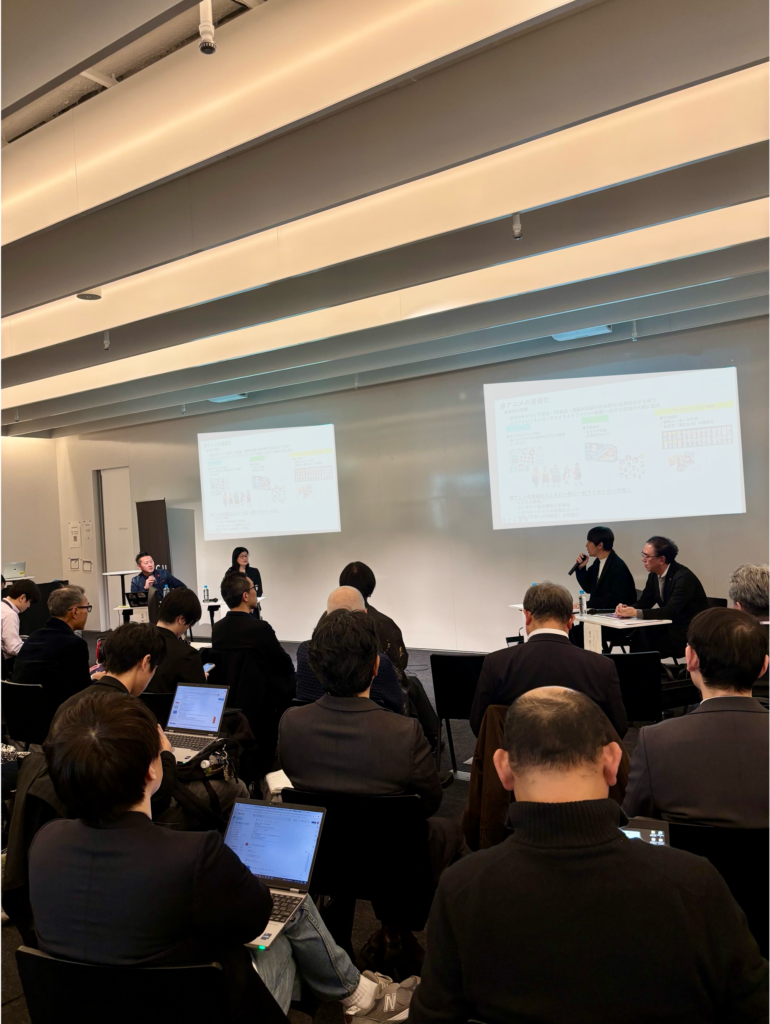
Koji Oiki, Head of the IP Business Development Headquarters within the Business Transformation Division of the Information & Communication Business Headquarters at TOPPAN Inc., and Director of TOPPAN COSMO Inc., delivered a presentation on “Challenges in Collaboration within the IP Content Industry and the Role of Bridging Different Sectors.”
Mr. Oiki explained that TOPPAN supports Japan’s IP content industry by leveraging its strengths in high-quality manufacturing rooted in printing technology, as well as its broad production expertise accumulated through experience across diverse industries. He noted that the company serves as a bridge connecting approximately 20,000 business partners and licensors.
He also analyzed that the distinctive worldbuilding and high quality of Japanese IP content stem from characteristics deeply rooted in Japanese culture itself—such as attention to detail, precision, a unique spiritual sensibility, and a persistent pursuit of excellence.
At the same time, Mr. Oiki pointed out that differences in perspective can sometimes arise between licensors and licensees. While licensors tend to prioritize maintaining the integrity of a work’s worldview, settings, and trust with fans from a long-term perspective, licensees often focus more on attracting customers, generating buzz, and maximizing visibility. He explained that TOPPAN’s role is to “translate,” coordinate, and concretize these differing perspectives.
As examples of the company’s commitment to craftsmanship, he introduced projects such as a faithful replica of the Rakuchū-Rakugai-zu Byōbu folding screen valued at ¥10 million, as well as miniature books small enough to fit through the eye of a needle. He also showcased a collaboration with Ishiya Co., Ltd. in which high-resolution digital archive data of works by Katsushika Hokusai was used to create premium chocolate packaging.
In addition, Mr. Oiki discussed initiatives such as TOPPA!!! BASE inside Akihabara Station and HYPER JAPAN, a Cool Japan event that has been held 21 times in the United Kingdom. Through these initiatives, TOPPAN promotes Japanese entertainment, food culture, traditional culture, gaming, and technology to international audiences.
Mr. Oiki concluded by stating, “Drawing on our experience in carefully handling intellectual property and content through our printing business and the digital archiving of cultural assets, our role is to connect companies and IP content through high-quality partnerships and meaningful relationships.”
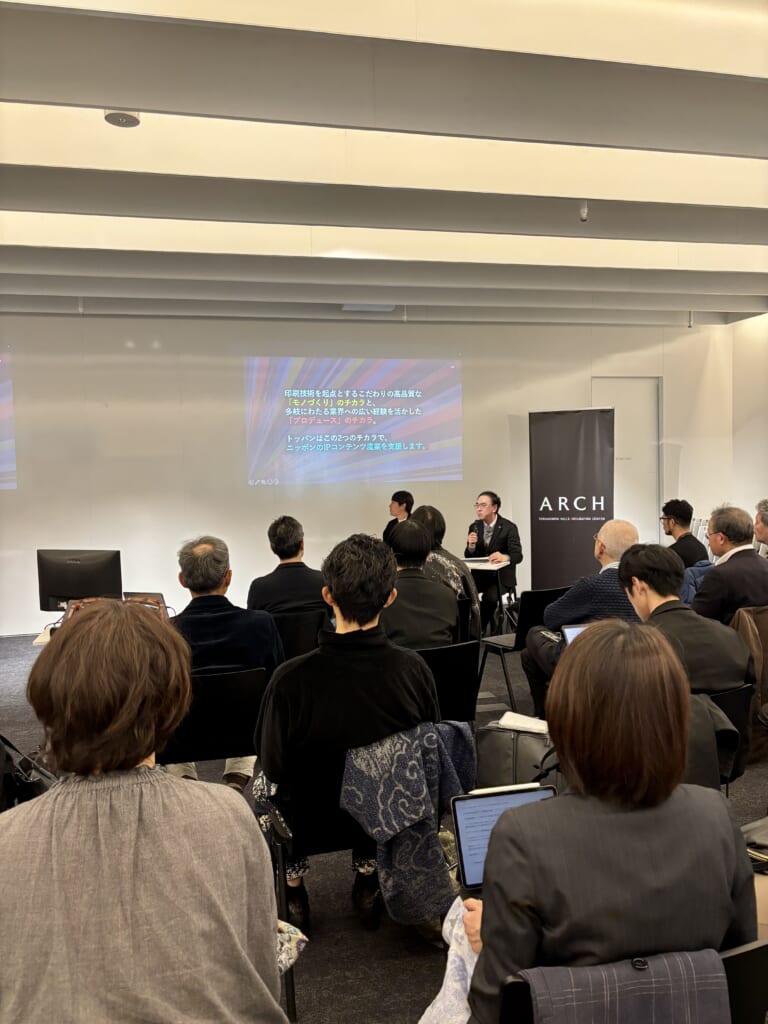
During the Q&A session, numerous questions were actively raised from both in-person and online participants. Discussions included concrete topics such as consultations on IP collaborations across a wide range of industries and whether it would be appropriate to directly approach rights holders and related organizations regarding potential partnerships.
Following the session, a networking event was held at the venue until the very end of the program, providing opportunities for speakers and participants to exchange ideas and deepen connections. The event concluded successfully amid lively interaction and enthusiastic engagement from attendees.