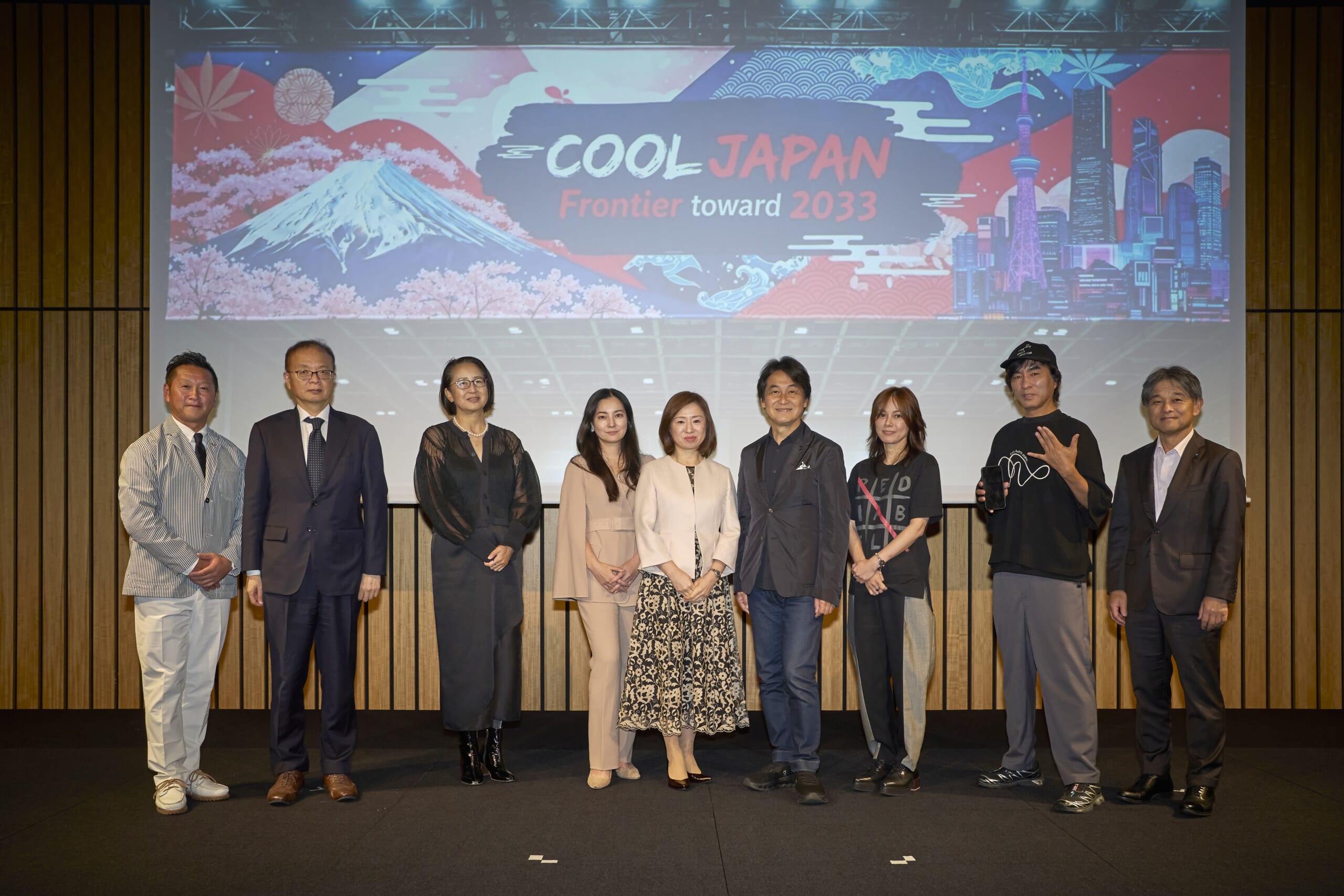



Speakers & Presentation Topics
Adam Fulford, CEO of Fulford Enterprise Co., Ltd., who has lived in Japan for more than 40 years and has long worked on translation and supervision for Japanese television programs related to English language education, spoke about one of the “invisible assets” of Japanese culture: the spirit of consideration for others and cooperation with those around you. He explained that this mindset of “caring for others” is becoming less common overseas and is perceived by many foreigners as a uniquely valuable aspect of Japanese culture.
Mr. Fulford pointed out that regional areas of Japan—where traditional Japanese culture and ways of thinking remain especially strong—hold tremendous potential for attracting inbound tourism. He outlined three major benefits that foreign visitors can bring to local communities.
First is the direct economic impact through tourism consumption. Second is exposure to highly skilled and specialized individuals. By welcoming visitors with perspectives and expertise rarely encountered in everyday local life, regional communities can gain new inspiration and opportunities.
Third, he emphasized the advantage local communities have in being able to “selectively adopt outside ideas with flexibility.” Regions do not need to accept every suggestion brought from abroad; instead, they can choose and incorporate only the ideas that best fit their local vision. He described this ability to “take the best parts” as one of the unique advantages of inbound tourism.
At the same time, Mr. Fulford highlighted challenges in Japan’s intercultural communication. Although Japan possesses a culture centered on consideration for others, he argued that many translations seen in regional areas are not truly created “with the audience in mind.” While translations may be grammatically correct in Japanese terms, they are often written from a Japanese perspective and therefore fail to resonate with international audiences. He stressed the importance of transforming such language into words that genuinely “speak to the hearts” of people from the perspective of the intended audience.
Finally, he introduced the concept of “contribution-based tourism” as a framework for co-creation with international visitors. Rather than tourists simply consuming local attractions, he proposed organizing decentralized international conferences in which participants stay for several days in different regional communities, discovering both local strengths and challenges. At the end of the journey, all participants would gather to share ideas and proposals, some of which could potentially be adopted as valuable contributions to regional development. Mr. Fulford suggested that such initiatives could help “co-create value from Japan’s invisible cultural assets” together with international participants.
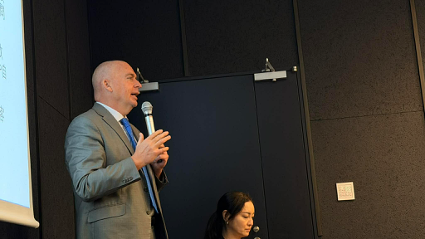
Robert D. Eldridge, Representative of the Eldridge Research Institute, who has lived in Japan for more than 30 years, delivered a thoughtful presentation on the importance of regional communities in preserving Japanese culture. Drawing from both his academic background and practical experience in research, education, and public policy, he offered perspectives grounded in both theory and real-world policy implementation.
Mr. Eldridge identified Japan’s declining birthrate, population decline, and excessive concentration of people and resources in Tokyo as major national challenges. He warned that addressing these issues is essential in order to prevent the irreversible loss of regional cultures and traditions.
He further argued that two fundamental problems lie at the root of these challenges. The first is that many of Japan’s valuable resources—including knowledge, human talent, time, nature, and vacant houses—remain underutilized. The second is the persistence of siloed administrative structures, which tend to produce one isolated solution for each individual problem rather than comprehensive policies capable of addressing multiple interconnected issues from a broader perspective.
Finally, speaking from personal experience, Mr. Eldridge emphasized that many foreigners living in Japan love the country just as deeply as Japanese people do. He encouraged participants to actively involve and make use of such internationally minded individuals who genuinely care about Japan, highlighting the importance of co-creation and collaboration with people from overseas who share a passion for Japanese culture and society.
Sakiko Yamada, Representative of the International Gastronomy Society and Asia Representative of the Sports Doctors Network
Sakiko Yamada shared perspectives on Japan as viewed from overseas, drawing on her approximately 18 years of living abroad and her extensive experience in global business, while also introducing concrete business examples.
One example involved Japanese actors working in Hollywood. In the past, they were often placed in situations where they had little choice but to portray “Japan as imagined by overseas creators.” However, in the case of Shōgun, the actors themselves also served as producers under the condition that the production would authentically reflect real Japanese culture. By thoroughly pursuing the expression of “authentic Japan,” the series achieved major global success.
Ms. Yamada explained that this success demonstrated how works are highly valued when Japanese creators take an active role in presenting Japan honestly and authentically. Rather than merely adapting to overseas expectations, she emphasized the importance of proactively communicating Japan’s own perspectives and actively participating on the global stage.
She also noted that interest in Japan’s regional areas is growing internationally, particularly regarding the “soft” aspects of Japan, such as hospitality and regional revitalization initiatives. Ms. Yamada shared her own philosophy that regional communities should not be viewed simply as “local areas within Japan,” but rather as destinations with globally valuable appeal when their unique characteristics are properly utilized.
Finally, she explained that her own projects involve “re-editing” and rediscovering Japan’s appeal together with overseas fans of Japan, crossing fields such as entertainment, medicine, food, and regional development in order to present local resources to the world through compelling narratives.
Looking ahead, Ms. Yamada suggested that applying Japanese values themselves toward solving regional and social issues will become an increasingly important way of communicating Japan to the world. She concluded by presenting a new vision for Cool Japan: rather than simply promoting and selling Japanese culture overseas, the future of Cool Japan lies in Japan becoming “a platform for co-creation,” working together with global partners to solve shared social challenges.
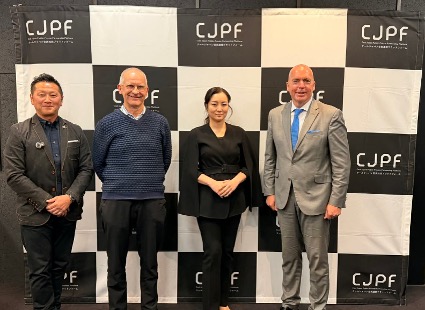
During the cross-talk session, lively exchanges of ideas took place not only among the speakers themselves but also through Q&A discussions with both in-person and online participants.
One major theme was “how to further deepen regional initiatives.” Questions were raised regarding the development of the next generation of leaders and the importance of identifying key figures within local communities. Discussions explored the qualities needed in individuals who can serve as driving forces for regional projects, as well as concrete methods for building effective collaboration.
Participants also discussed how region-specific cultural assets—such as areas associated with famous Sengoku-era warlords and historic shrines and temples—are perceived by international audiences and how these local resources can be communicated as compelling attractions to people from overseas.