



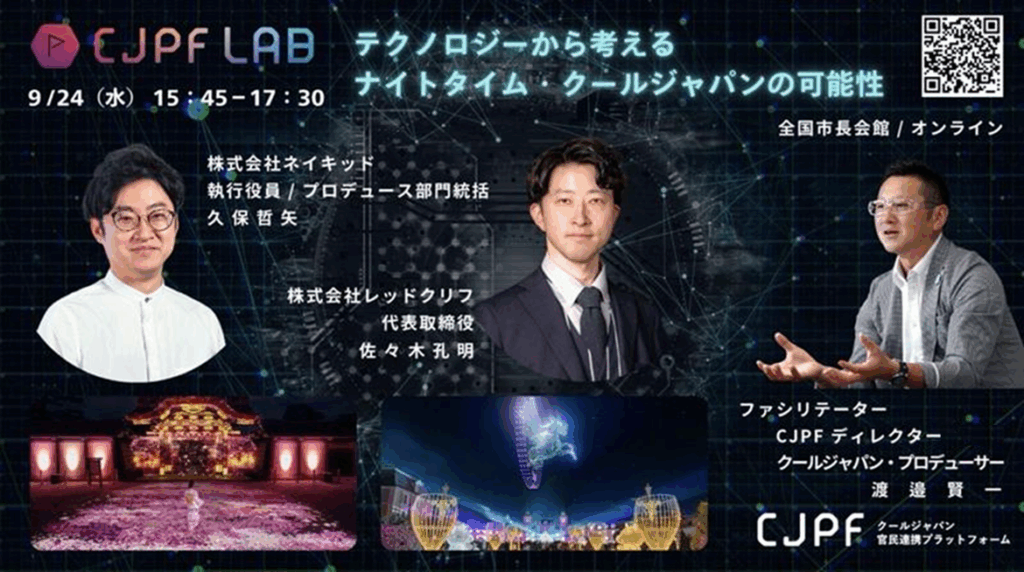
Leading experts from the fields of drone shows and projection mapping gave presentations on regional revitalization initiatives utilizing these two cutting-edge technologies, sharing concrete case studies from their respective industries.
Speakers & Presentation Topics
First, Redcliff Inc. President and CEO Komei Sasaki delivered a presentation titled “The Future of Cool Japan in the Sky.”
Mr. Sasaki introduced the company’s achievement of operating more than 100,000 drones during the permanent drone show at the Osaka Expo, making Redcliff the company that has flown the largest number of drones in the world. He also presented a vision for drone shows that combine Japan’s intellectual property content—such as anime and video games—with aerial entertainment, highlighting the potential of utilizing the sky as a new form of “media” to create a nighttime economy.
In addition, he introduced initiatives that combine drone shows with traditional fireworks festivals, as well as projects that recreate historical heritage sites, including lost castle ruins, through drone technology. He also showcased a case in which 8,000 drones were used to screen a music video featuring Hatsune Miku, achieving a Guinness World Record.
Mr. Sasaki commented, “The sky is an untapped regional resource that can be transformed into a new tourism asset through drone shows,” presenting a new perspective on the utilization of space.
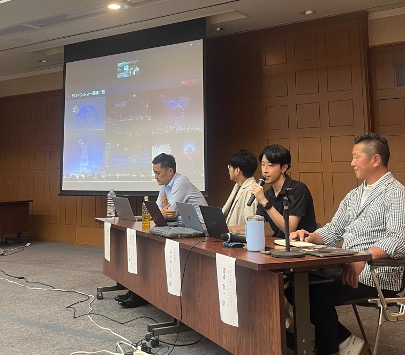
Next, NAKED, INC. Executive Officer and Head of the Production Division Tetsuya Kubo delivered a presentation titled “The Potential of Cool Japan Beginning with Light.”
Mr. Kubo introduced in detail the company’s illumination projects centered on the NAKED GARDEN ONE KYOTO initiative, including the long-running nighttime light-up program at Nijō Castle, which has continued since 2017. Drawing on production achievements at major domestic and international events such as the G7 Hiroshima Summit and the World Aquatics Championships Fukuoka 2023, he explained practical monetization methods developed in collaboration with regional resources. These included establishing fundraising models utilizing Japan’s corporate hometown tax donation system and creating “dual-use” revenue models through nighttime operations.
He also introduced examples from across Japan, including branding support for Achi Village as “Japan’s Best Starry Sky,” which increased tourist numbers to more than 150,000 visitors, as well as the Glowing Art Prefectural Office SAGA project at the Saga Prefectural Government Office.
Mr. Kubo stated, “By illuminating cultural heritage sites such as shrines and temples, we can create new nighttime value. What is important is expressing these spaces with modern technology while respecting their history and cultural background,” emphasizing the importance of integrating culture and technology.
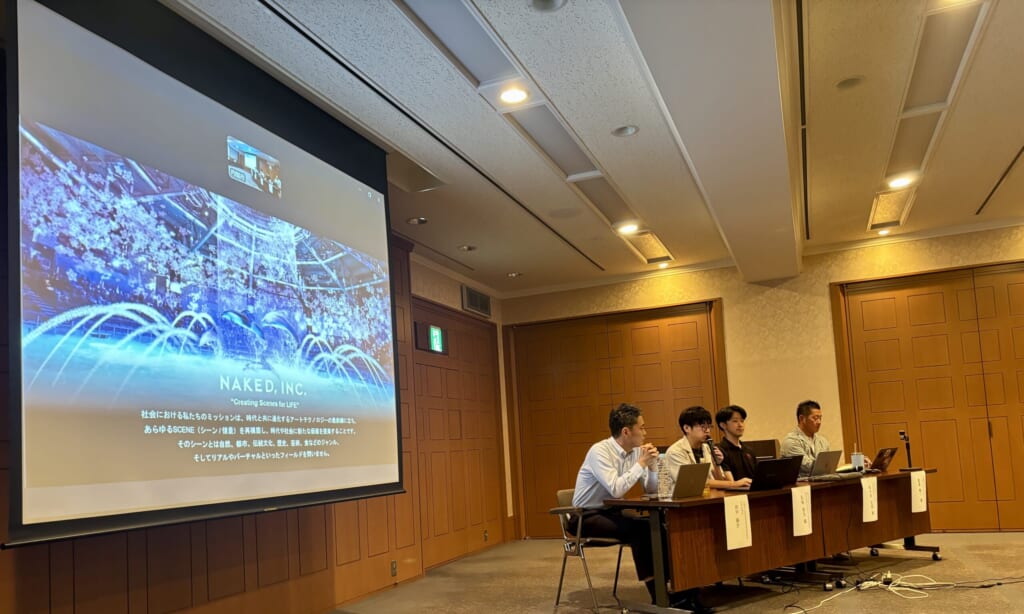
In the discussion following both presentations, participants explored how collaboration among local governments, private companies, and creators is essential for evolving these initiatives from one-time events into sustainable, ongoing projects. The session also featured wide-ranging questions and discussions on topics such as the importance of diversified monetization models—including corporate sponsorships, hometown tax donation programs, and nighttime business operations—as well as the creation of sustainable tourism content through collaboration with local communities.
