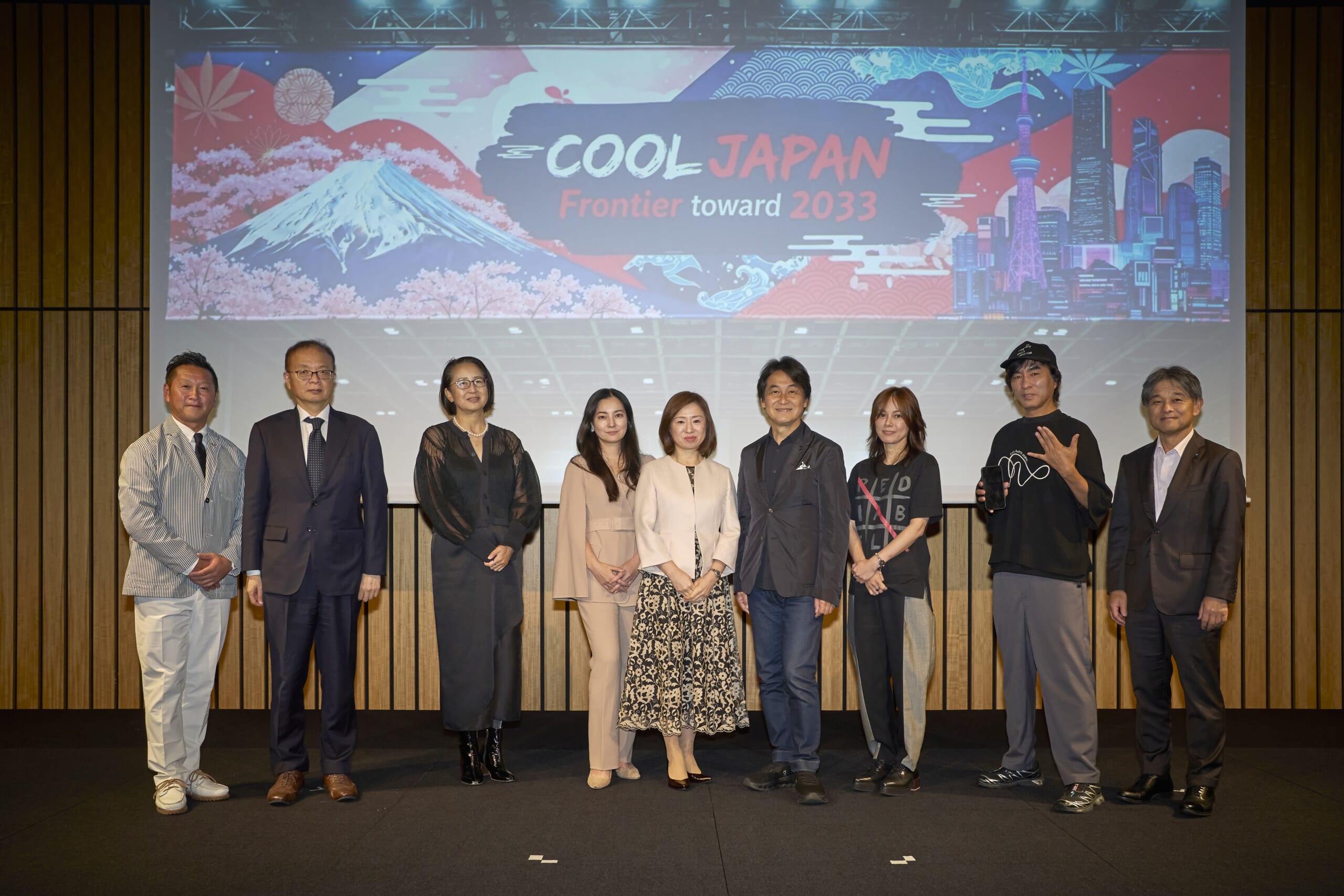



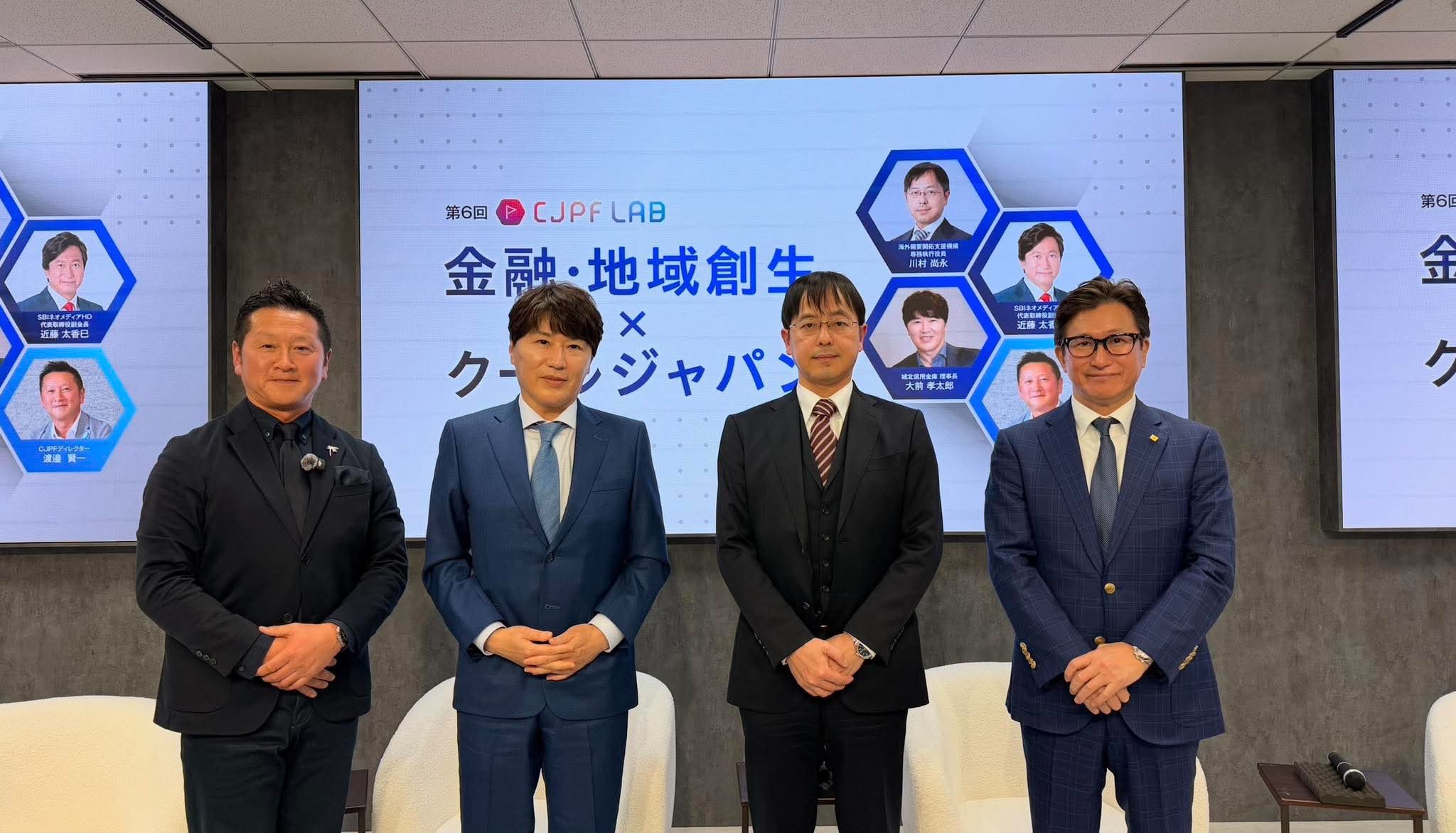
The 6th CJPF LAB of this fiscal year was held under the theme of “Finance & Regional Revitalization × Cool Japan.” Three guest speakers were invited: Kotaro Omae, Chairman of Johoku Shinkin Bank; Naohisa Kawamura, Senior Managing Executive Officer of Cool Japan Fund, Inc. and Takami Kondo, Vice Chairman & Representative Director of SBI NEO MEDIA HOLDINGS Co., Ltd. / President & Group Representative of NEXYZ.Group. The moderator was Kenichi Watanabe, Director of the Cool Japan Public-Private Partnership Platform (CJPF). The event gathered a large number of participants both in-person and online, and generated lively discussion about insights from financial professionals engaged in Cool Japan, along with practical case studies. (Event date: March 3, 2026)
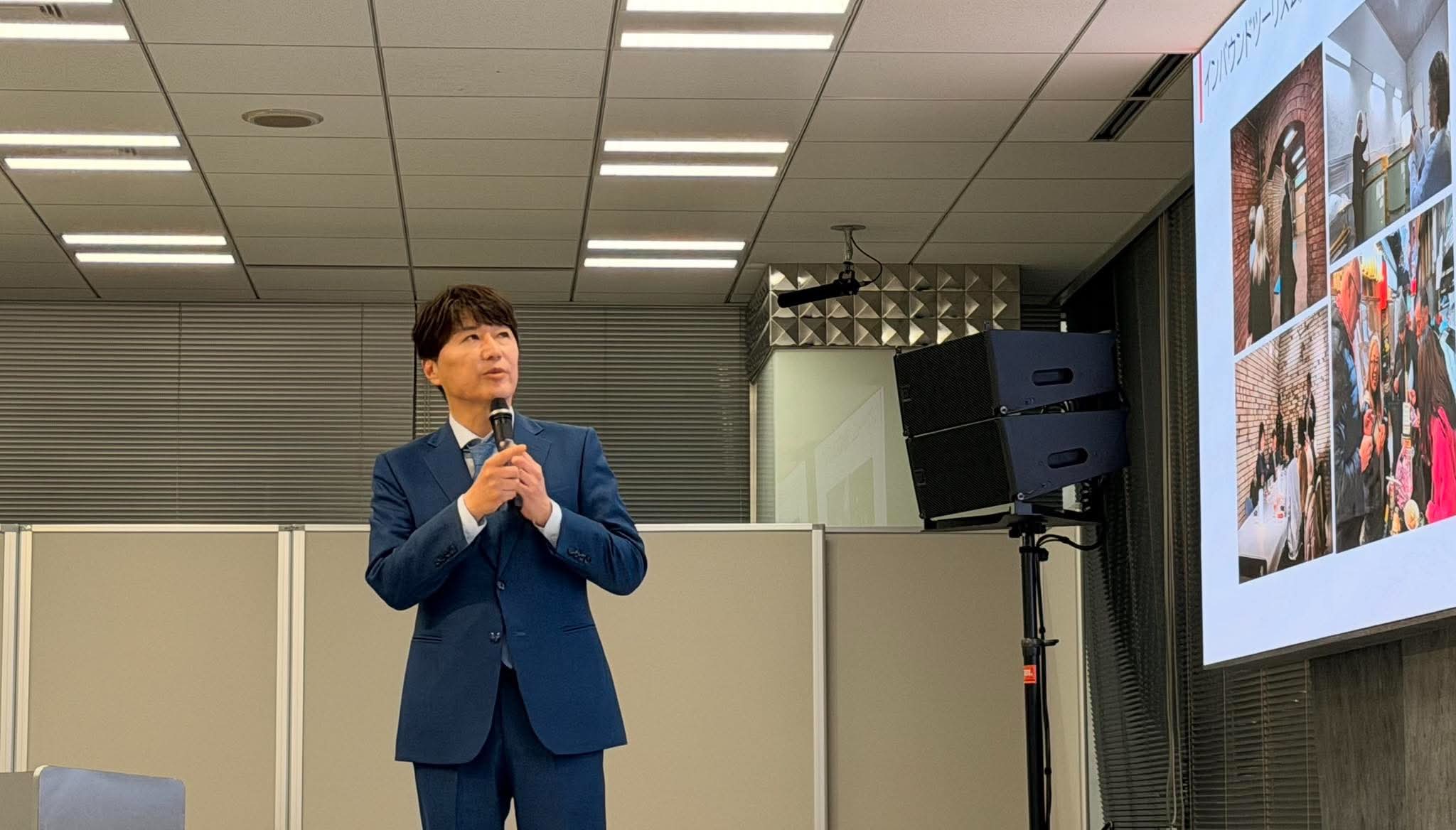
Kotaro Omae | Chairman, Johoku Shinkin Bank
Mr. Omae spoke on the topic of “Challenging Content Development to Enhance Regional Value.” He began by classifying financial institutions’ activities into “traditional financial services” and “non-financial services,” then explained the background behind Johoku Shinkin Bank’s focus on community engagement. As a non-profit cooperative financial institution, the bank can leverage its ability to take a long-term view on investment decisions, and has been pursuing content development directly linked to enhancing regional value.
As a specific example, he first introduced the creation of a sake brand set in Kita Ward, Tokyo. The ward has a history of being called the “Sacred Land of Sake,” symbolized by the former National Brewing Laboratory (Red Brick Sake Brewery), a nationally designated Important Cultural Property. During the Sino-Japanese and Russo-Japanese Wars, over 3,000 master brewers (toji) gathered there from across the country to acquire the latest sake-making techniques—all in service of securing liquor tax revenue to fund the war effort. As chairman of the tourism association, Mr. Omae promoted the use of this facility and organized tours combining a facility visit with a full-course French dinner featuring fermented ingredients (approximately 50,000 yen per person), which sold out immediately. This experience strongly convinced him of the potential of heritage tourism.
Building on these experiences, in 2024 he launched a sake called “HIEI” brewed using the “Asukayama yeast” collected from the former Shibusawa Garden in Asukayama Park, priced at 10,000 yen per bottle and limited to 2,024 bottles. It sold out and went into increased production. It has since been listed at Michelin-starred restaurants and the Imperial Hotel, becoming a high-value-added brand. Products such as caneles and ice cream made from sake lees are also being developed with local businesses. The subsequent “BYAKKO,” a kijoshu (a premium sake brewed with sake in place of water), achieved 200–300% of its crowdfunding target within 5–6 hours after a press conference, attracting significant attention.
As a second example, he introduced the “Kita Ward Fireworks Festival,” which fuses music, fireworks, and drone performances. Starting from scratch 13 years ago, it has grown to rank No. 1 in the national rankings. A top fireworks team and drone performance team “Red Cliff”—which also made headlines at Expo 2025 Osaka—collaborate on an approximately one-hour show that takes six months to develop, synchronized to a musical worldview.
Third, he introduced an internet radio station, “Shibusawa-kun FM,” entirely planned, recorded, and edited by the bank’s own employees. Currently running 15 programs, it features content aimed at a wide audience, including “Mystery Job Hunting,” which takes an unfiltered look at job searching, and a program hosted by comedian Angora Soncho (of the comedy duo Nyanco star).
Finally, Mr. Omae raised questions about the future role of financial institutions. He noted that a law revision four years ago expanded the scope of service recipients from “client companies” to “other businesses,” arguing that financial institutions now have the potential to become direct players, directors, and producers in content development. His words—shaped by a philosophy of “it’s okay to make mistakes; embrace a fail-forward mindset”—offered rich food for thought on the new intersection between finance and Cool Japan.
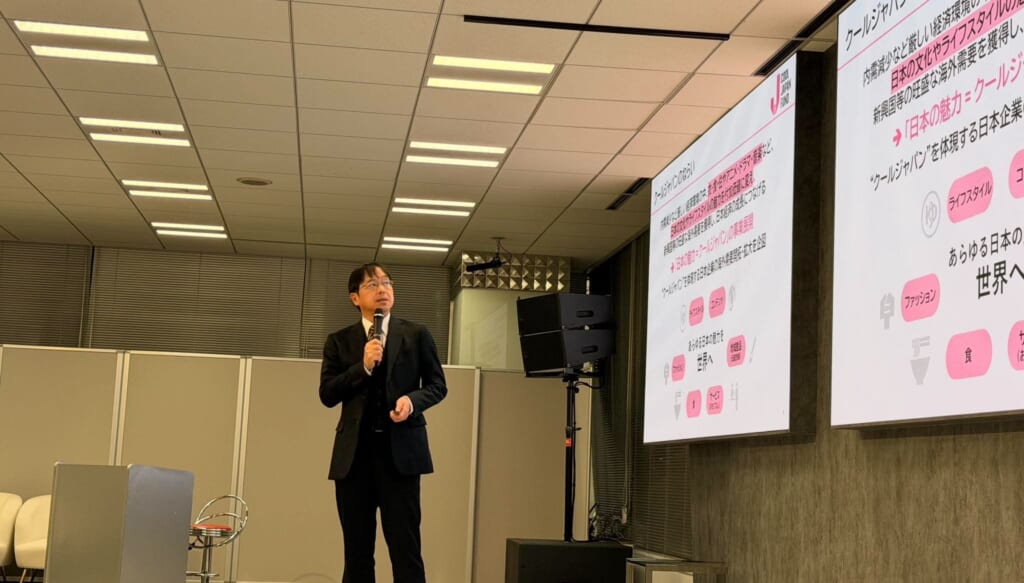
Naohisa Kawamura | Senior Managing Executive Officer, Cool Japan Fund, Inc.
Mr. Kawamura spoke under the title “Taking the ‘Japanese Way’ Further into the World,” presenting an overview of Cool Japan Fund, Inc. and specific investment cases. Cool Japan Fund, Inc. is a public-private fund established in November 2013 under a specific law, with the aim of contributing to Japan’s sustainable economic growth by expanding supply and demand for attractive goods and services rooted in Japan’s lifestyle and culture. Operating under the belief that Japanese content such as anime and food can become a core industry on par with automobiles and semiconductors, the fund provides high-risk capital—equity investments and subordinated bonds—in advance of private investors, serving as a catalyst for private investment.
On investment criteria, Mr. Kawamura explained that investments must simultaneously satisfy three conditions: policy significance, ripple effect, and profitability. Since the standard investment ticket size is approximately 1 billion yen, a sub-fund of 100–200 million yen—jointly established with a Taiwanese fund—is used for startup-focused investments. One of this sub-fund’s investees is the drone performance team “Red Cliff,” which drew attention from the audience as it was also connected to Mr. Omae’s Kita Ward Fireworks Festival.
Specific investment cases presented include: financing to help anime production companies acquire and retain ownership of their IPs (through Japan Content Factory); overseas expansion support for music live hall chain “Zepp” in partnership with Sony; introduction of Japanese food ingredients to London; equity stakes in wine distribution companies in China, Australia, and the UK to develop overseas sales channels for Japanese sake; investment in an Indonesian vending machine manufacturer to promote distribution of Japanese beverages and confections; and investments in a Taiwan-based inbound tourism platform and luxury travel agencies in the US, UK, and Australia.
Mr. Kawamura identified inbound tourism and entertainment/content as two key areas of future opportunity. He noted that the convergence of anime and regional tourism—exemplified by “anime pilgrimage tourism”—and the channeling of repeat visitors to regional areas represent major business opportunities. At the same time, he pointed out the shortage of equity investment in regional areas by financial institutions, calling for a change in mindset among both local entrepreneurs and financial institutions.
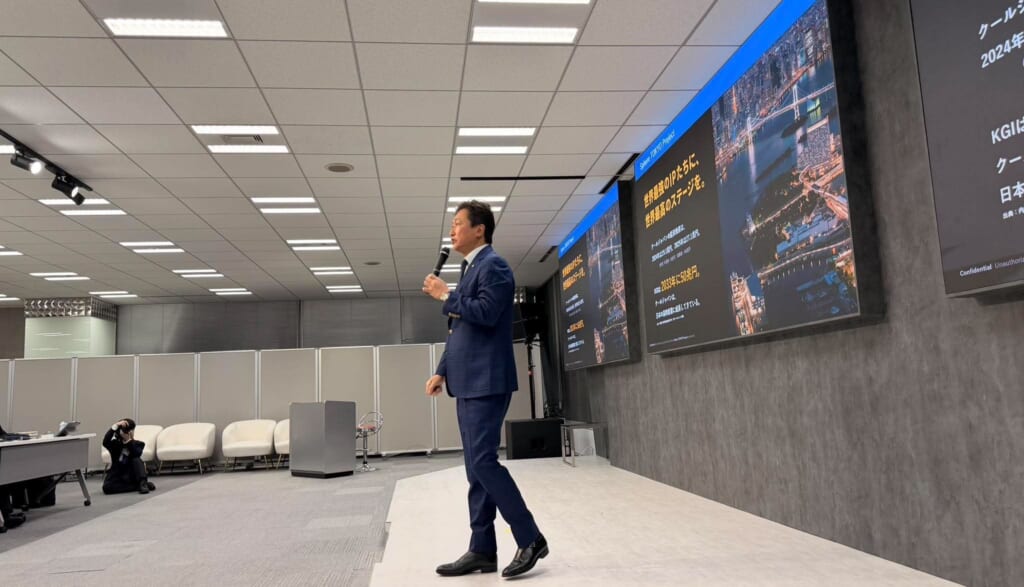
Takami Kondo | Vice Chairman & Representative Director, SBI Neo Media Holdings / President & Group Representative, NEXYZ.Group
Mr. Kondo spoke under the title “SBI Group × Cool Japan: Realizing a 100-Trillion-Yen Market with All of Japan,” unveiling a grand vision that was also a first public announcement for the SBI Group. He introduced SBI Group as one of Japan’s largest financial conglomerates, with securities, banking, and insurance at its core, a market capitalization of approximately 4.9 trillion yen, consolidated total assets of 37 trillion yen, 18 listed companies, and 820 affiliated companies. The group has recently expanded beyond finance into areas such as biotech, Web3, media, and entertainment, and is planning a content fund of approximately 100 billion yen.
He introduced the activities of “SBI MUSIC CIRCUS,” a subsidiary under the group: hosting approximately 30 events per year including music festivals, fireworks shows, food festivals, and drone shows, drawing as many as 200,000 attendees. Upcoming events include: an all-night music festival in Hokkaido (September, its first time in Hokkaido); the “SBI Mai-Hanabi” (SBI Dance Fireworks), the first time in the Kanto region where a music live and fireworks are synchronized (May 30, sold out with 25,000 attendees); and an all-night dome festival co-hosted with SoftBank (June 27, 15,000 people).
Mr. Kondo then unveiled what he called a “first-ever public announcement”: the “Sphere Tokyo Project.” The Sphere is a next-generation spherical entertainment venue, with its first location in Las Vegas at a construction cost of 350 billion yen. Featuring a 360-degree LED screen and the world’s largest sound system, it allows 20,000 people to have an immersive experience without VR headsets. He highlighted its high revenue potential, including multiple daily screenings, combined concert and screening runs, and advertising revenue from the exterior LED (approximately 70 million yen per 24 hours).
He cited Daiba (the Odaiba area) in Tokyo as a candidate site, pointing to its access to Haneda Airport, port facilities capable of accommodating large vessels, and synergies with tourism routes utilizing the waterways. In terms of funding, SBI Group envisions contributing 200 billion yen through a dedicated fund, with the remainder to be covered by a corporate consortium. Mr. Kondo passionately called for “a national, metropolitan, and private-sector effort—all of Japan—to make this happen,” generating great excitement in the audience.
Cross-Talk & Q·A Session
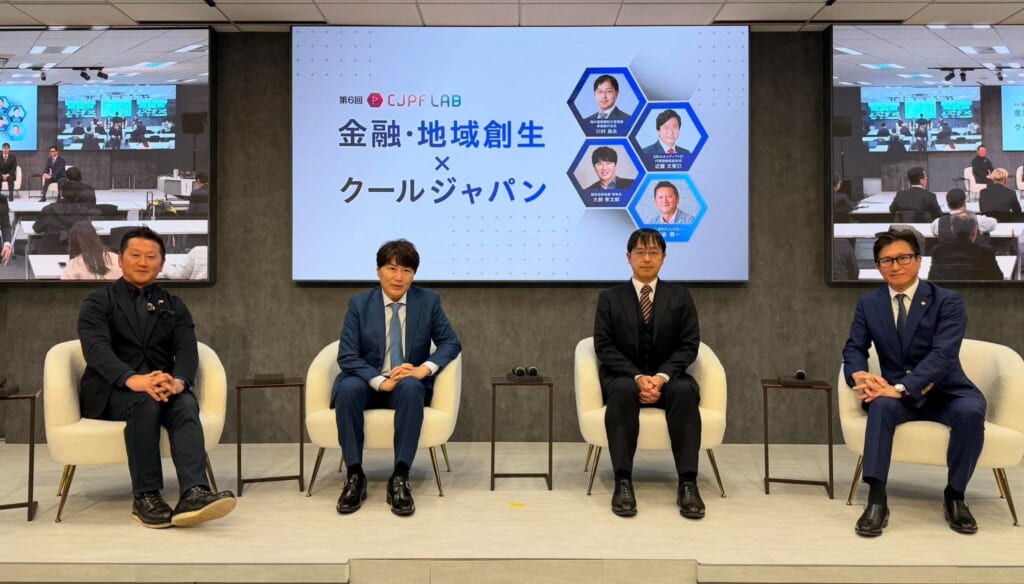
Facilitated by Mr. Watanabe, a cross-talk among the three panelists followed. When Mr. Watanabe posed the question, “In an era where festivals, culture, and other things that have not traditionally been recognized as financial assets are becoming new units of value circulation, what is the role of financial institutions that issue credit?” the panelists responded: “The fusion of media and finance is already the global norm. This is an era of betting on passion and potential rather than probability” (Mr. Kondo); and “Financial institutions should be in a position to lead entertainment and media” (Mr. Omae). All three panelists expressed their expectations for a new role for finance.
The Q&A session drew active questions from both in-person and online participants. When asked about the possibility of investing in the Sphere, Mr. Kawamura candidly noted that “due to constraints on the fund’s duration, it is likely that the investment return timeline won’t align,” while still expressing willingness to contribute to pump-priming initiatives. When Hiroaki Sasaki, representative of drone performance team Red Cliff, passionately declared, “I want to connect the Sphere and sky drones—I’d love to be part of it,” Mr. Kondo immediately responded, “Let’s definitely collaborate,” making for a moment where real connections were formed live on stage.
Voices also pointed out the shortage of small-scale financing and talent development in the Cool Japan industry. Mr. Kawamura introduced sub-fund-based small-ticket investment initiatives; Mr. Kondo remarked that “the essence of development is giving people a stage and opportunity, and believing in them wholeheartedly.” A warning was sounded: “The true resource of Cool Japan lies in the vast number of people who are passionate about something. Investment in such people must never be allowed to dry up.” Mr. Watanabe structured the talent development discussion across three dimensions—dissemination, cultivation, and strengthening—deepening the dialogue further. The networking session that followed saw conversation between panelists and participants continue without pause until the very end, making for a uniquely energetic exchange that exemplified the spirit of this event.