

Bringing Arimatsu Narumi Shibori to the World How suzusan Is Shaping a Next-Generation Model for Traditional Craftsmanship

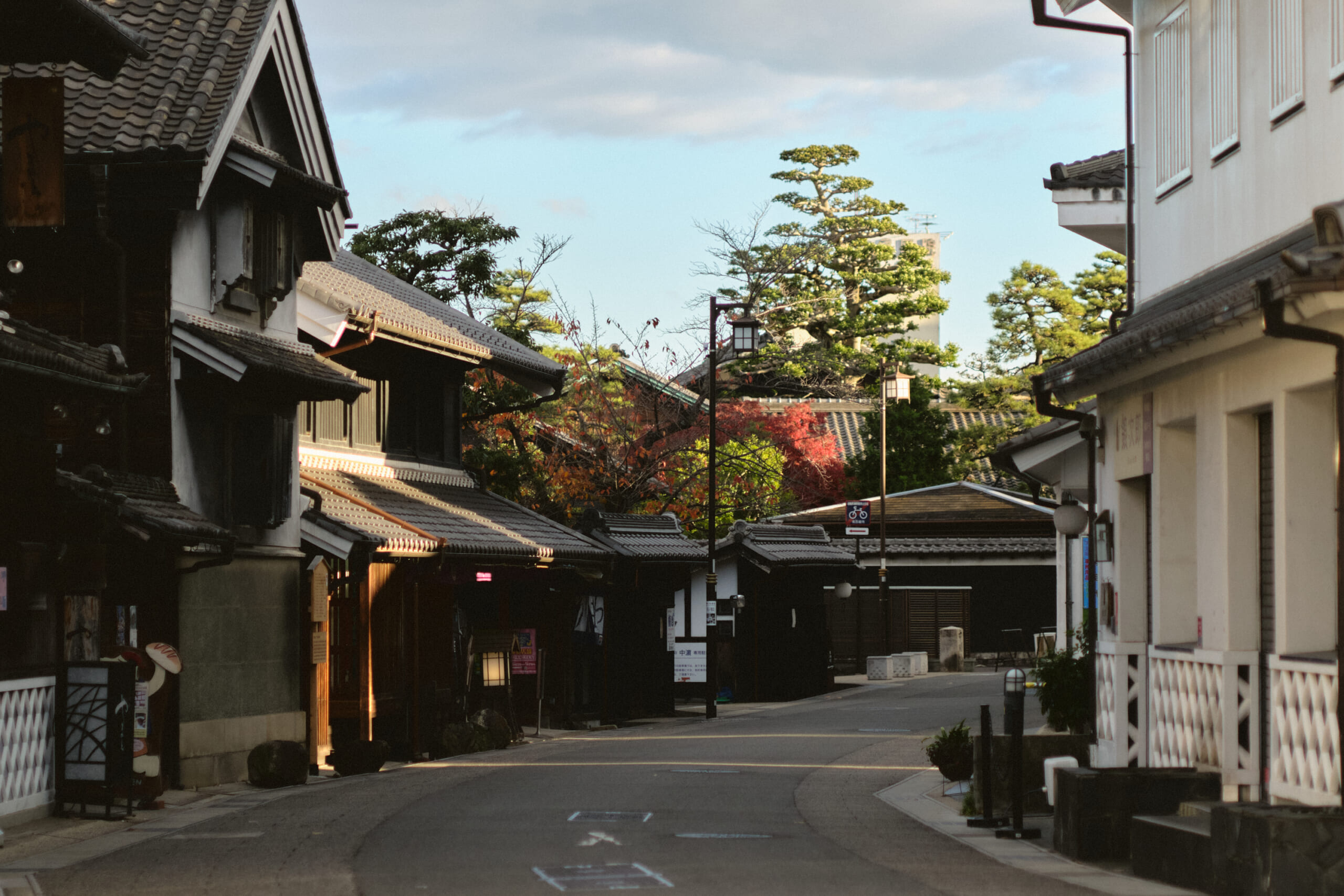
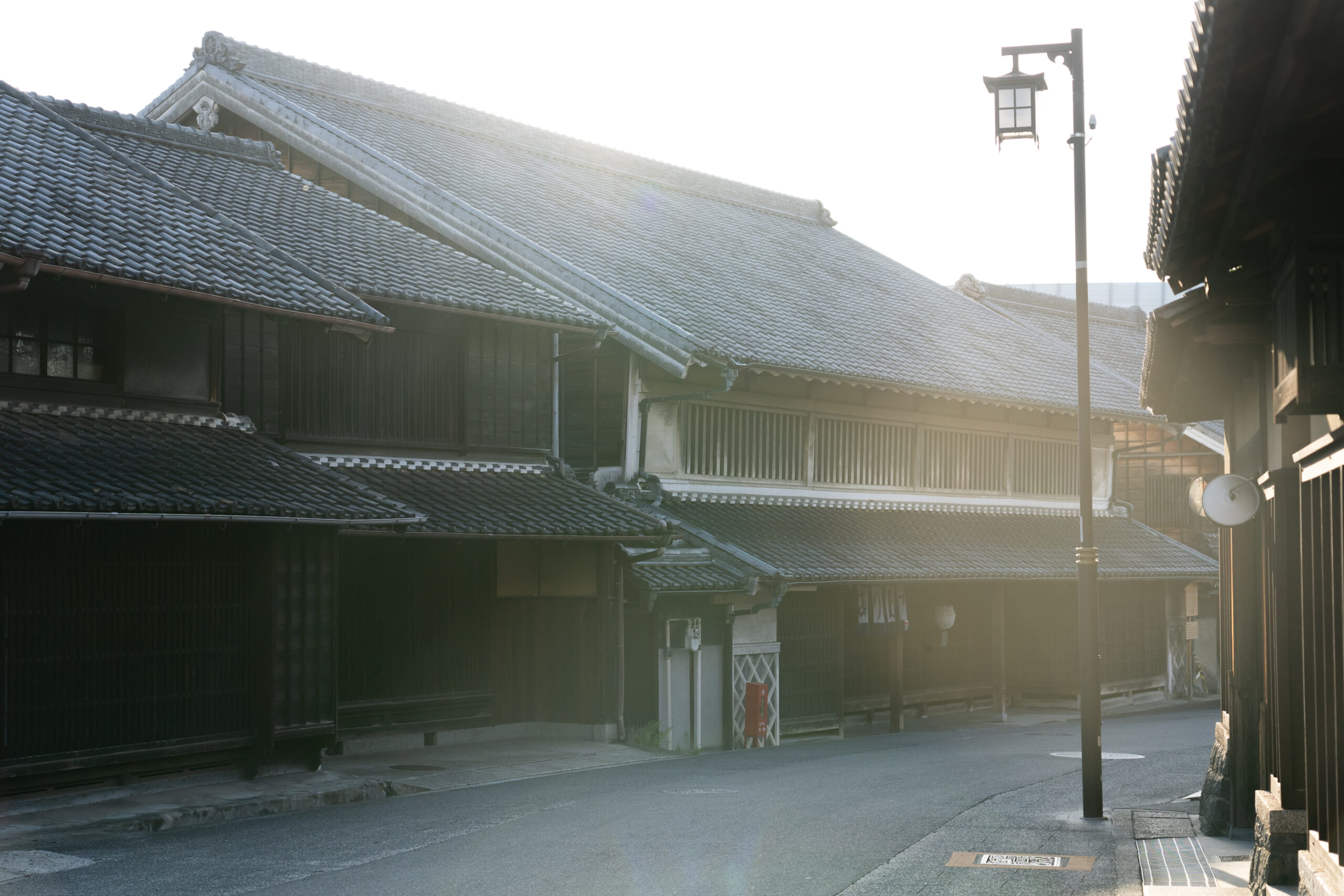
Arimatsu, a district in Nagoya, is widely known as the home of Arimatsu Narumi Shibori, a traditional Japanese tie-dyeing craft with a history spanning more than 400 years. During Japan’s period of rapid economic growth, production volumes expanded significantly. However, since the 2000s, declining demand and the aging of artisans have pushed the industry into a serious crisis, with some even warning that “there may be no successors left within 15 years.”
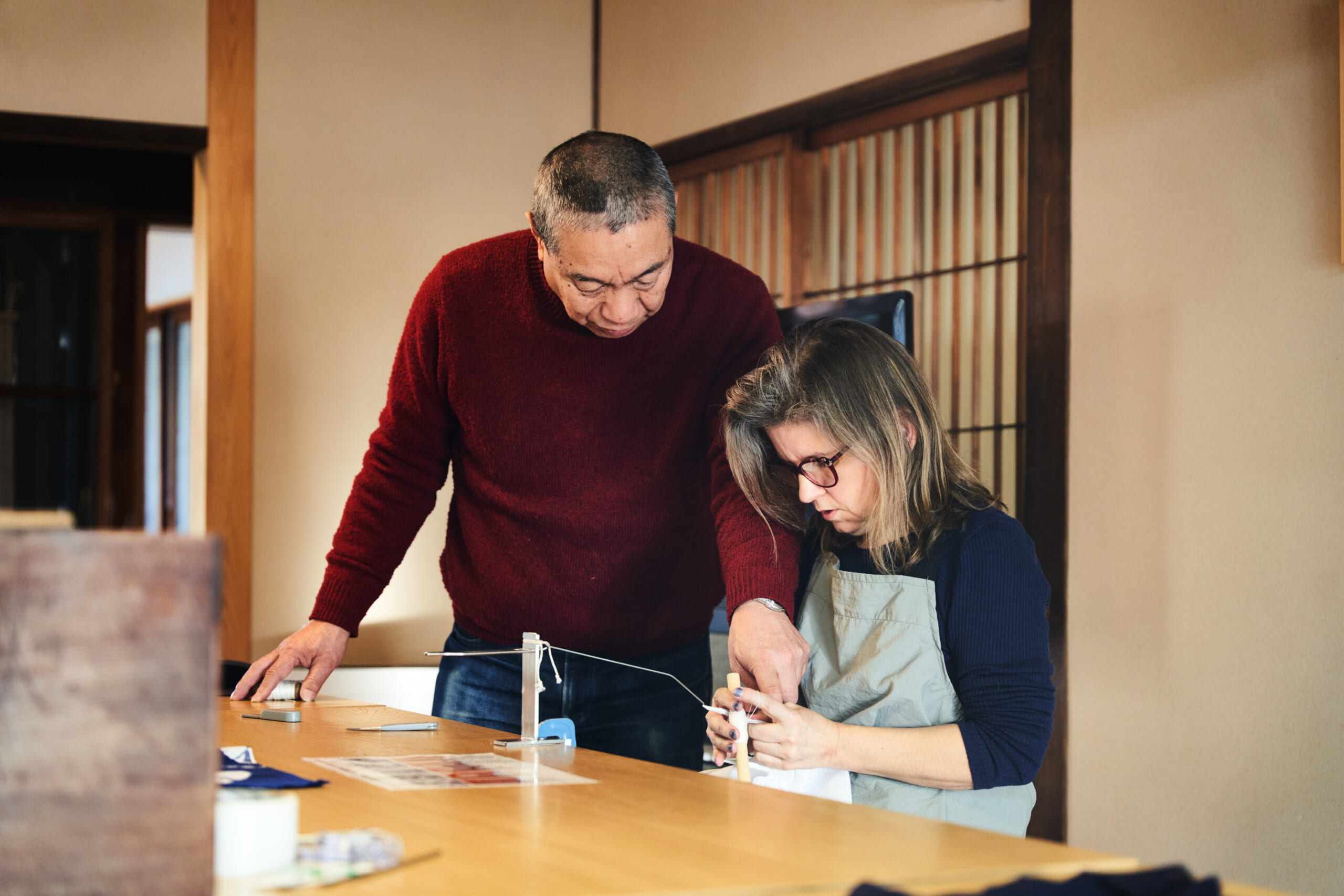
Born and raised in Arimatsu, Hiroyuki Murase comes from a family that has operated a shibori-related business for four generations. Today, he serves as CEO and Creative Director of the textile brand suzusan.
Like many traditional craft businesses in the area, Murase’s family business specialized in only one step of the highly segmented production process, operating as a small-scale artisan workshop. Growing up, he witnessed firsthand the gradual decline of the town and its industry. At the same time, however, he did not initially plan to inherit the family business. Instead, he studied fine art at art schools in both the United Kingdom and Germany.
Afterward, Murase founded suzusan in Germany, becoming the company’s first incorporated base. From the very beginning, the brand adopted a clear philosophy: never compromise on “making things by hand” and “making them in Arimatsu.” With this approach, suzusan developed its brand with global markets in mind from the outset.
Today, the company works with approximately 120 retailers worldwide, primarily across Europe and the United States, and around 80% of its sales now come from overseas markets.
As a result, younger generations in their 20s and 30s have gradually begun returning to Arimatsu’s manufacturing community, bringing new energy to the region’s traditional craftsmanship.
Chapter.01
Changing Where Craftsmanship Is Valued
Rediscovering Traditional Craftsmanship and the Birth of suzusan
The turning point came at a textile trade show in the United Kingdom. Murase accompanied his father to the exhibition simply to help out, but what he witnessed there would fundamentally change his perspective. For the first time, he saw Arimatsu shibori appreciated not as something old-fashioned or nostalgic, but as something contemporary — valued purely for its beauty and craftsmanship.
“In Japan, when people hear the word ‘shibori,’ many immediately picture the yukata their grandmother used to wear,” says Hiroyuki Murase. “After the exhibition, I had the opportunity to show some shibori textiles my father had entrusted to me to the owner of a globally renowned contemporary art gallery. To my surprise, he evaluated them as works of art and decided to purchase them on the spot. Until then, I had thought traditional Japanese crafts and Western contemporary art existed in completely separate worlds. But seeing someone appreciate the work itself simply because they found it beautiful left a deep impression on me. It was a major realization. Sometimes, by moving something from point A to point B, the way people perceive it changes, and entirely new value emerges. I felt that traditional craftsmanship also needed that kind of perspective.”
In 2008, Murase founded suzusan in Germany. His co-founder was a German friend from his student dormitory who had studied business management. Together, they recognized the potential of bringing traditional Japanese craftsmanship into the European luxury market.
The brand began modestly, with the two traveling across Europe carrying shibori scarves and selling them directly to stores themselves.
“From the beginning, he strongly believed that Arimatsu Narumi Shibori belonged in the high-end market,” Murase recalls. “But when we started, we had neither funding nor industry connections, and very little knowledge of the fashion business itself. On top of that, it was right after the global financial crisis, so the economic environment was extremely challenging. At first, we tried contacting stores by email and phone, but received very little response. For a long time, we struggled to find retailers willing to carry our products.”
The pair visited well-known select shops throughout Europe that already carried Japanese fashion brands.
“Most of the time, we were rejected,” Murase says. “But in many cases, buyers would explain specifically why — whether it was the colors, patterns, sizing, or materials. We would take that feedback home, make adjustments, and come back again. It was a continuous process of refinement. In hindsight, scarves were also a relatively easy item for stores to introduce, since they could simply be displayed alongside existing apparel on the same rack. That likely made them easier for retailers to accept as well.”

Chapter.02
Designing Products to Resonate Globally
Crafting Price, Story, and Context for International Audiences
Today, approximately 80% of suzusan’s revenue comes from overseas markets. Having grown primarily through Europe, the company has recently expanded further into North America and Asia, evolving its sales structure into a more diversified global network. The brand now works with more than 120 retail partners worldwide.
“Japan serves as the production base with exceptional craftsmanship, Europe is where value is curated and presented, and the United States and Asia offer scale and market potential,” says Hiroyuki Murase. “We clearly differentiate the role of each region and develop the business according to their cultural characteristics and market structures.”
At the same time, Murase believes one of the biggest obstacles facing Japanese traditional crafts today is not technical capability, but the ability to communicate their value effectively.
“To be chosen in the global market, what matters even more than technical skill is the ability to communicate and to understand market structures. Japan’s extraordinary craftsmanship cannot fully resonate overseas unless its meaning and values are conveyed together with the product itself. In that sense, one of the biggest challenges for Japanese brands is communication. The products themselves are truly exceptional, but many brands struggle with how to explain them and how to tell their story.”
According to Murase, global audiences are often less interested in simply what a product is or how it was made, and more interested in why it matters. To transform traditional Japanese products into something desired internationally, certain aspects needed to be thoughtfully updated.
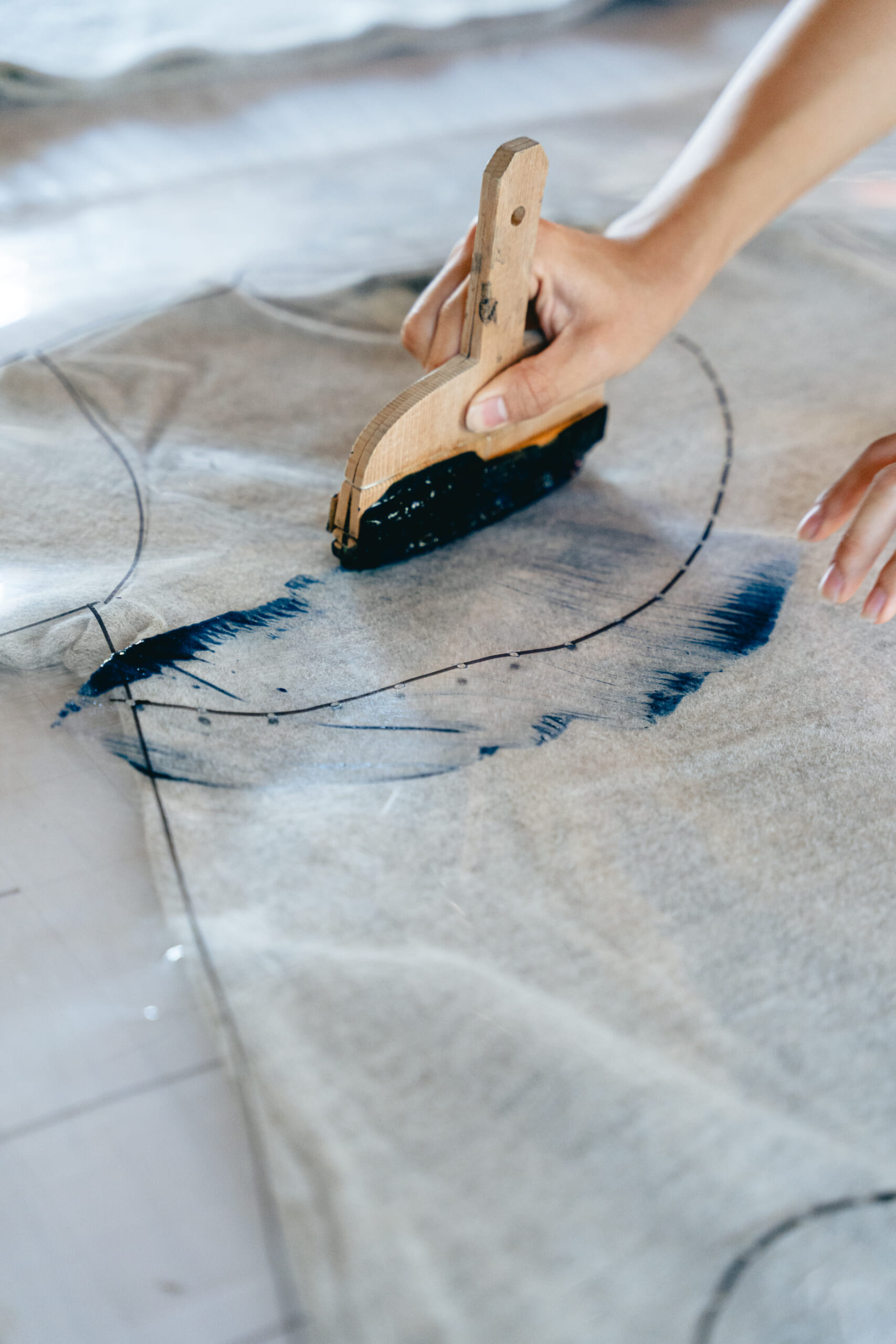
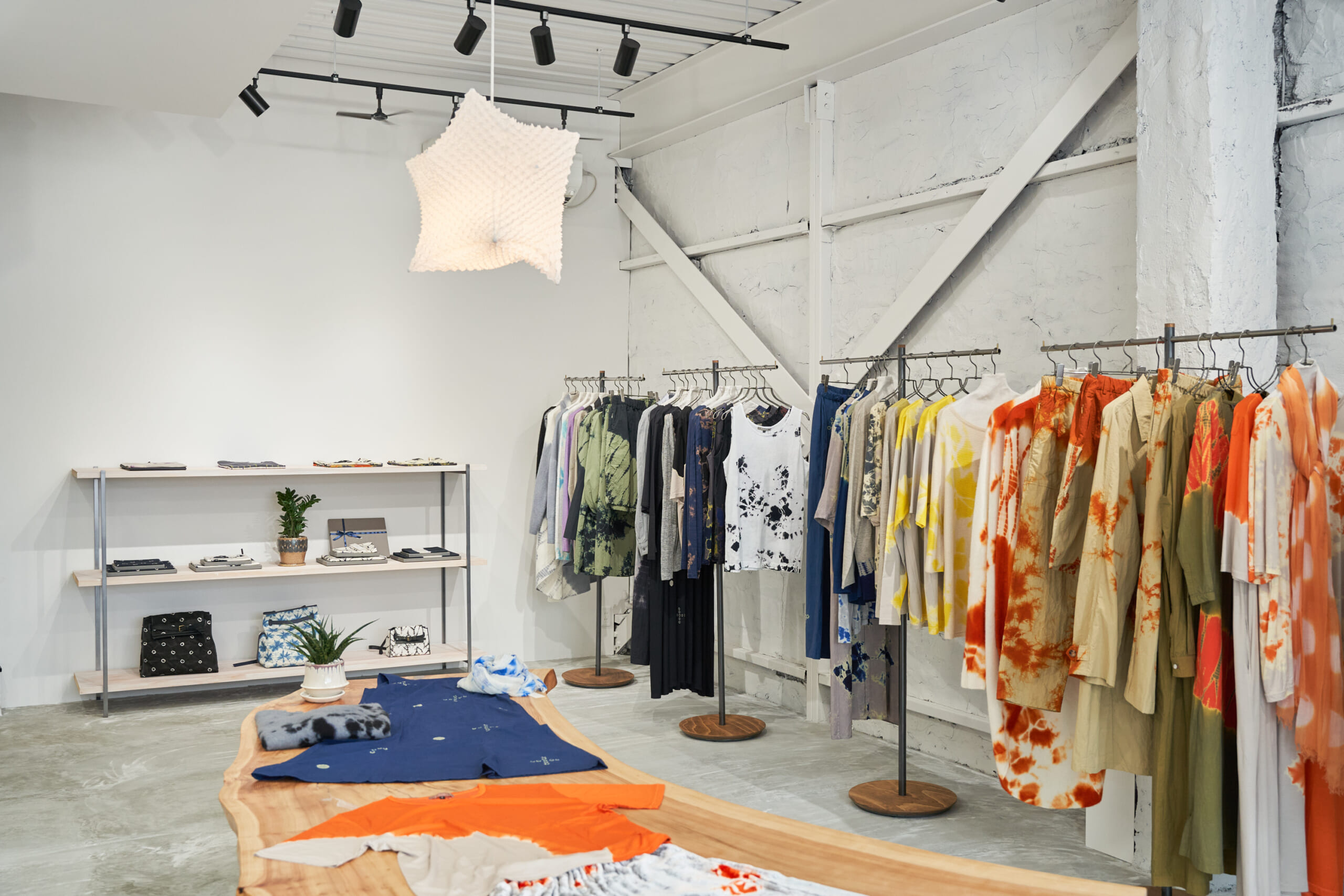
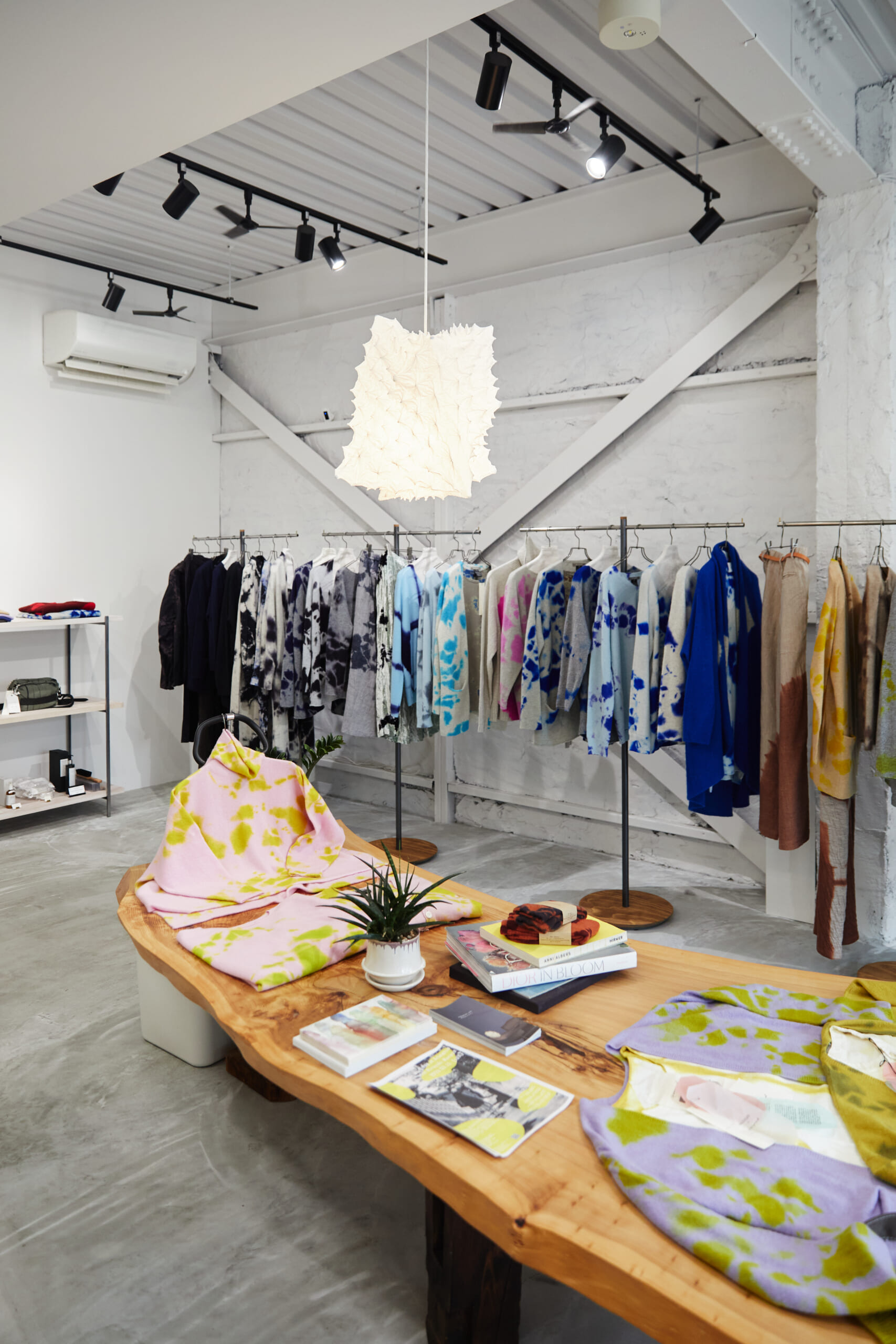
“At suzusan, we broke Arimatsu shibori down into three elements: technique, material, and application. We preserved the 400-year-old dyeing techniques, but shifted the materials from cotton to cashmere, and the application from yukata to scarves. By adapting it into a form that naturally fit within European fashion culture, it suddenly became something that could exist seamlessly within the context of European luxury fashion.”
This philosophy directly influenced the brand’s pricing strategy as well. Rather than competing at lower price points, suzusan deliberately positioned itself in the premium market after researching global consumer demand. Even scarves priced around ¥70,000 gained strong support among affluent customers through small-scale pop-up events.
What matters, Murase explains, is not the price itself, but whether the brand can clearly communicate why the product carries that price. Supporting that explanation is the narrative behind the product.
Interestingly, suzusan’s target audience is not necessarily people already familiar with Japanese culture.
“Our ideal customer is someone who doesn’t even have soy sauce at home and doesn’t use chopsticks,” Murase says. “In other words, people who have very little connection to Japanese culture in the first place. That’s why we don’t emphasize labels like ‘Made in Japan’ or ‘traditional craftsmanship.’ Instead, we focus on communicating the product’s intrinsic appeal and background as something with universal value.”
Murase is also confronting another structural issue within Japanese traditional crafts: the relationship between highly specialized production systems and modern expectations around traceability and sustainability.
“Another issue that becomes increasingly important is the global movement toward sustainability and traceability. In reality, Japan’s traditional system of specialized division of labor doesn’t always align well with how traceability is understood internationally. Overseas markets increasingly expect brands to show whether products are sustainable and who made them. But crafts such as Arimatsu Narumi Shibori rely on highly segmented processes — thread preparation, dyeing, binding, finishing — each handled by independent artisans. Because the work is divided across many specialists, it can be difficult to clearly explain who made the product, where it was made, and how it was produced. Structurally, Japanese traditional crafts are not always easily visible in that way.”
Rather than rejecting this traditional system, suzusan has focused on translating its value into a form global audiences can understand.
“We carefully visualize each process and the people involved, then edit and organize that complex background into something audiences can easily understand. I believe that role — translating complexity into meaningful stories — is what modern brands are increasingly expected to do.”
For this reason, the company designs exhibitions and pop-up events as immersive storytelling spaces, allowing customers to emotionally connect with even high-priced products.
“At a pop-up event in the United States, we intentionally limited the number of products and focused mainly on premium scarves and knitwear. Alongside the products, we created exhibitions explaining the production process and the stories behind the craftsmanship, so visitors could experience the products and narrative together as one. Many people responded strongly not just to the items themselves, but to the ideas and people behind them. Even when prices were significantly higher than in Japan, customers accepted them because they understood the value being conveyed.”
Looking ahead, the company plans to strengthen its direct-to-consumer business through e-commerce alongside its existing B2B wholesale operations centered around trade shows. As physical retail continues to decline globally, having a sales channel that allows customers to purchase products across borders is becoming increasingly essential to long-term brand sustainability.
“Where something is made, where it is presented, where it is sold — and how it is communicated. If those elements are designed properly, I believe Japanese traditional craftsmanship can absolutely succeed on the global stage.”

Chapter.03
Revitalizing Craft Communities and Creating a Cultural Cycle
From Local to Global — and Back to Local Again
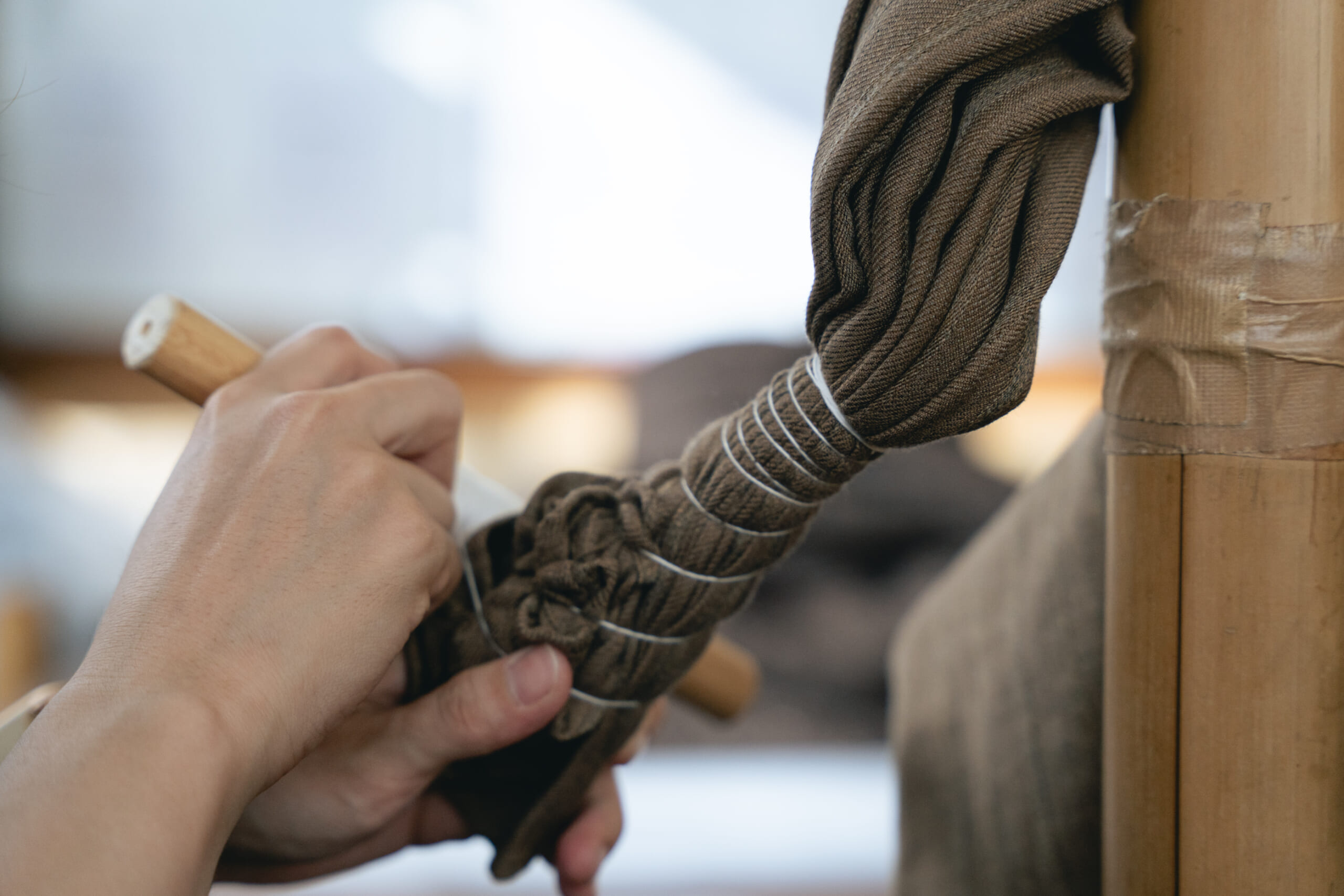
Since its founding, suzusan has remained firmly committed to two principles: “making everything by hand” and “making everything in Arimatsu.” Behind the revival of Arimatsu Narumi Shibori — once considered to be on the verge of disappearance — lies a conviction that Hiroyuki Murase established from the very beginning of the company.
“There were two things we decided from the start,” Murase explains. “One was that everything would continue to be made by hand, and the other was that everything would continue to be made in Arimatsu. Of course, it would have been far more efficient to manufacture overseas, and in reality, many traditional crafts have shifted production abroad. But these were the two things we absolutely did not want to change. I believed that if we could create a situation where Arimatsu Narumi Shibori was genuinely valued overseas, the craft itself would inevitably come back to life.”
As a result, the manufacturing community in Arimatsu is now undergoing a generational shift, with people in their 20s and 30s increasingly becoming central figures in the craft. New artisans are no longer coming only from the local area; people are relocating from across Japan — including Okinawa, the Kanto region, and Kansai — to live and work in Arimatsu.
“We’re now seeing the age demographics of the production community begin to change,” Murase says. “Creating an environment where younger people feel this can become a sustainable career has been incredibly important.”
Supporting this transformation is suzusan’s long-term commitment to global markets. Over the past 17 years, the company has steadily expanded its international presence throughout Europe and the United States, building partnerships with approximately 120 retailers worldwide.
“At this point, we estimate there are around 50,000 users globally,” Murase explains. “When expanding internationally, we don’t want to simply push Japanese culture outward in a one-sided way. Instead, we aim for a ‘local-to-local’ approach, where products become integrated into the cultural context of each region. When that happens, people begin using the products within their own lifestyles and cultures, and eventually they start telling those stories themselves. Then, some of those people come to Japan and visit Arimatsu to experience the cultural and historical background firsthand. We’re finally starting to see that kind of cycle emerge.”
In Arimatsu today, discovery tours for overseas visitors are also being organized, allowing participants to spend an entire day exploring the town. Rather than conventional sightseeing, these experiences are designed to help visitors understand the deeper cultural value of the region, including its manufacturing traditions and historical context.
“What we want to preserve isn’t simply a tourist destination,” says Murase. “We want to preserve places that hold genuine cultural value. Looking ahead, I’d also like to focus on community development — including finding new uses for vacant houses — from the perspective of how we pass the entire town on to the next generation. This challenge is not unique to Arimatsu; it’s something many regions across Japan are facing. What we’ve done here may not apply directly everywhere else, but I do believe it can serve as a model case.”
Sharing Experience to Bring Traditional Craftsmanship to the World
This vision also extends into Murase’s latest initiative, the “TOBIRA Project.” In January, the project organized a joint exhibition in Paris, aiming to transform the experience suzusan has accumulated — including international expansion, branding, wholesale operations, logistics, and adapting to overseas business practices — into knowledge that other traditional crafts and regional communities can also utilize.
“Facing overseas markets alone is incredibly difficult,” Murase says. “It took me more than 15 years to get to this point. If we can share that experience, then the next generation won’t need to spend the same amount of time figuring everything out before they can begin challenging themselves internationally.”
As one successful example of this model, suzusan continues to demonstrate a new vision for regional craftsmanship — one that moves from local communities to global audiences, and then back to local communities once again.
Arimatsu Narumi Shibori, once said to have “only 15 years left before disappearing,” is now being renewed by a younger generation of artisans and revitalized through its growing connection with the world.
Written by Riei Hayashi