



Expanding Globally Together with Fans Worldwide: How the Bandai Namco Group Leverages Data to Drive Global Growth
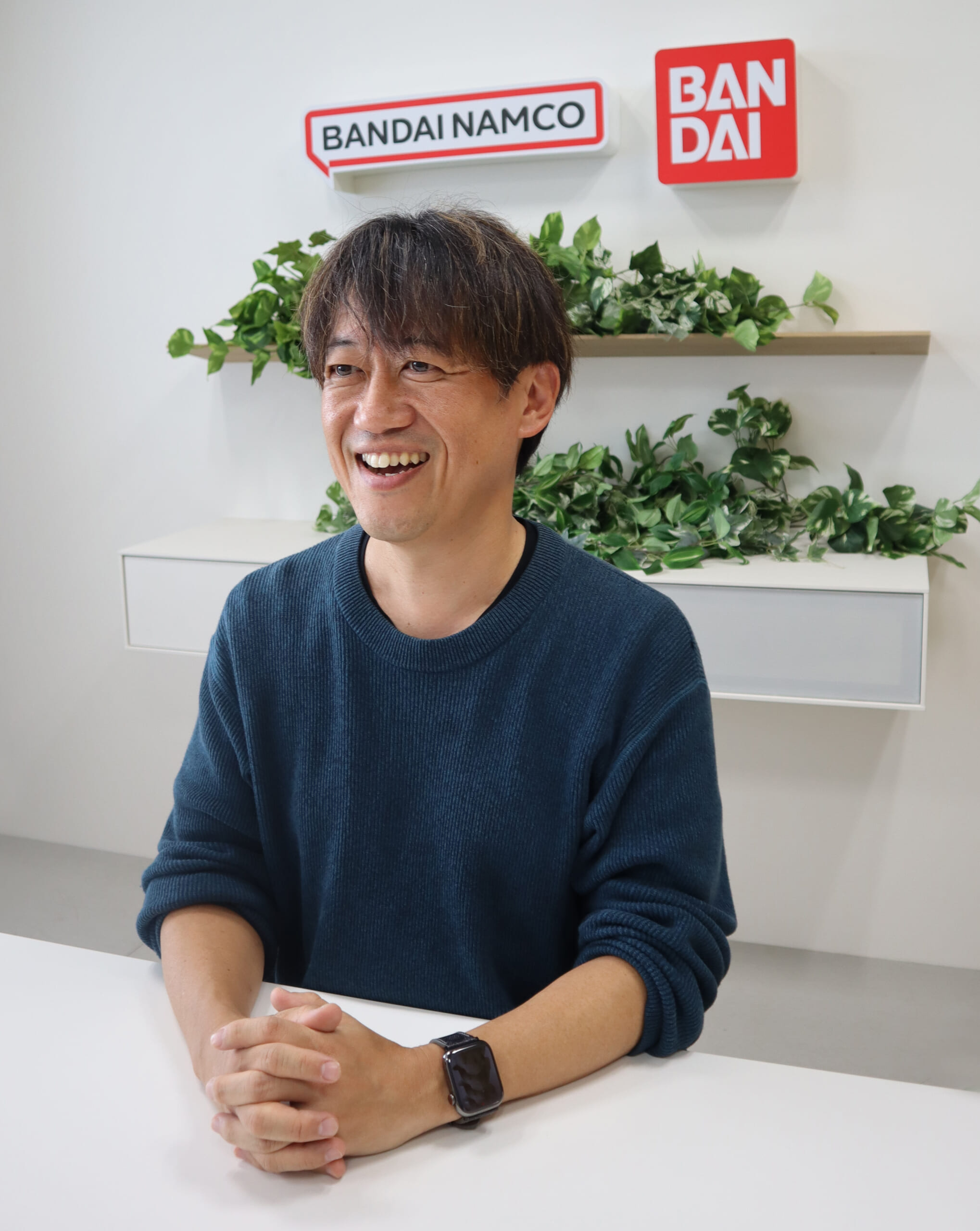
Koji Tezuka
Executive Officer, General Manager of Card Business Department
As Japanese entertainment content continues to expand globally, one question is becoming increasingly important once again: how should companies engage with fans around the world?
Anime, games, and character merchandise are already enjoyed by audiences across the globe, yet the way these works are received can differ significantly depending on the country or region. Approaches that succeed in Japan do not necessarily translate directly to international markets. So how should companies understand global audiences, and how can they build lasting relationships with fans worldwide?
To explore these questions, we spoke with Koji Tezuka of Bandai, part of the Bandai Namco Holdings Group, which globally develops some of Japan’s most iconic IP content franchises. In this interview, Tezuka discusses topics including data utilization, international expansion strategies, fan engagement, and talent development.
Interview conducted on March 24, 2026
Please note that the information in this article, including the interviewee’s affiliation and title, is accurate as of the interview date.
Chapter.01
How Data Utilization Spread Through Success on the Ground
Data utilization within the Bandai Namco Holdings Group did not begin as a fully developed company-wide strategy from the outset. Instead, it emerged from very practical challenges faced on the ground, along with repeated trial and error in trying to solve them.
One of the key turning points was the smartphone game Dragon Ball Z Dokkan Battle, operated by Bandai Namco Entertainment.

At the time, Koji Tezuka was involved with Dragon Ball Z Dokkan Battle as a producer. Despite strong confidence in the content itself, the game initially struggled to achieve the sales performance the team had expected. The biggest challenge was that no one fully understood why the results were falling short.
In response, Tezuka turned his attention to user data.
Mobile games make it possible to collect highly detailed behavioral data, including where users drop off, where they hesitate, and which parts of the experience create friction. By carefully analyzing this data, the team systematically identified pain points throughout the user experience, eventually uncovering more than 200 individual areas requiring improvement.
What proved most important was not dramatically changing the game’s overall direction, but steadily refining the smaller issues revealed through the data. By removing friction points one by one and lowering barriers throughout the user experience, overall satisfaction improved significantly.
As a result, the title’s business performance grew dramatically. Approximately two years after launch, monthly revenue had increased roughly twentyfold, turning the game into a major commercial success.
This experience fundamentally changed how the Bandai Namco Holdings Group viewed the value of data.
Previously, decision-making had often relied heavily on the intuition and experience of producers and creators. Data made it possible to identify specific problems and prioritize what needed to be improved first. In other words, data was not treated as something that automatically provided answers, but rather as a tool for clarifying priorities in improving the customer experience.
The lessons learned from this success gradually spread across other titles as well.
As teams collected and visualized user behavior data from additional games, they began identifying not only differences between titles, but also common patterns and recurring challenges. By analyzing why retention rates were high in one title, they realized those insights could potentially be applied elsewhere.
Over time, this approach expanded beyond mobile games into other business areas, including console games, video content, trading cards, and toys.
Even in businesses where direct user data was harder to obtain, the group began combining membership logs, surveys, purchase histories, and other forms of information to better understand what kinds of customers existed and how they behaved.
At the same time, however, Tezuka emphasizes that data is not a cure-all. — nor should using data become a goal in itself.
He explains that teams do not need to consult data every time they develop a new idea. What matters is simply having data available naturally when it becomes necessary. In his view, data should function as infrastructure: its value lies in being accessible when people want to use it.
This philosophy is also reflected in how the company approaches creative teams.
In entertainment, intuition and experience remain critically important. Many creators and producers place enormous value on their own instincts and sensibilities. At the same time, they naturally want to understand how audiences are responding to their work and how it is being received.
In that context, data is not used to deny creative instincts, but to visualize how audiences are actually engaging with content.
Rather than positioning intuition and data in opposition to one another, the company has gradually built a culture in which both are combined to support decision-making.
Supporting this broader effort is Bandai Namco Nexus, a group company responsible for both business-specific and cross-divisional data analysis.
In many organizations, data teams operate separately from business units, analyzing information externally before returning results to operational teams. However, Bandai Namco Nexus takes a different approach. Its members work closely within each business division itself, seeking to understand goals, challenges, and creative intentions from the same perspective as the teams they support.
Rather than simply delivering analysis, they focus on understanding what teams are struggling with and why specific information is needed, then organizing and presenting data in forms that creators and producers can actually use effectively in practice.
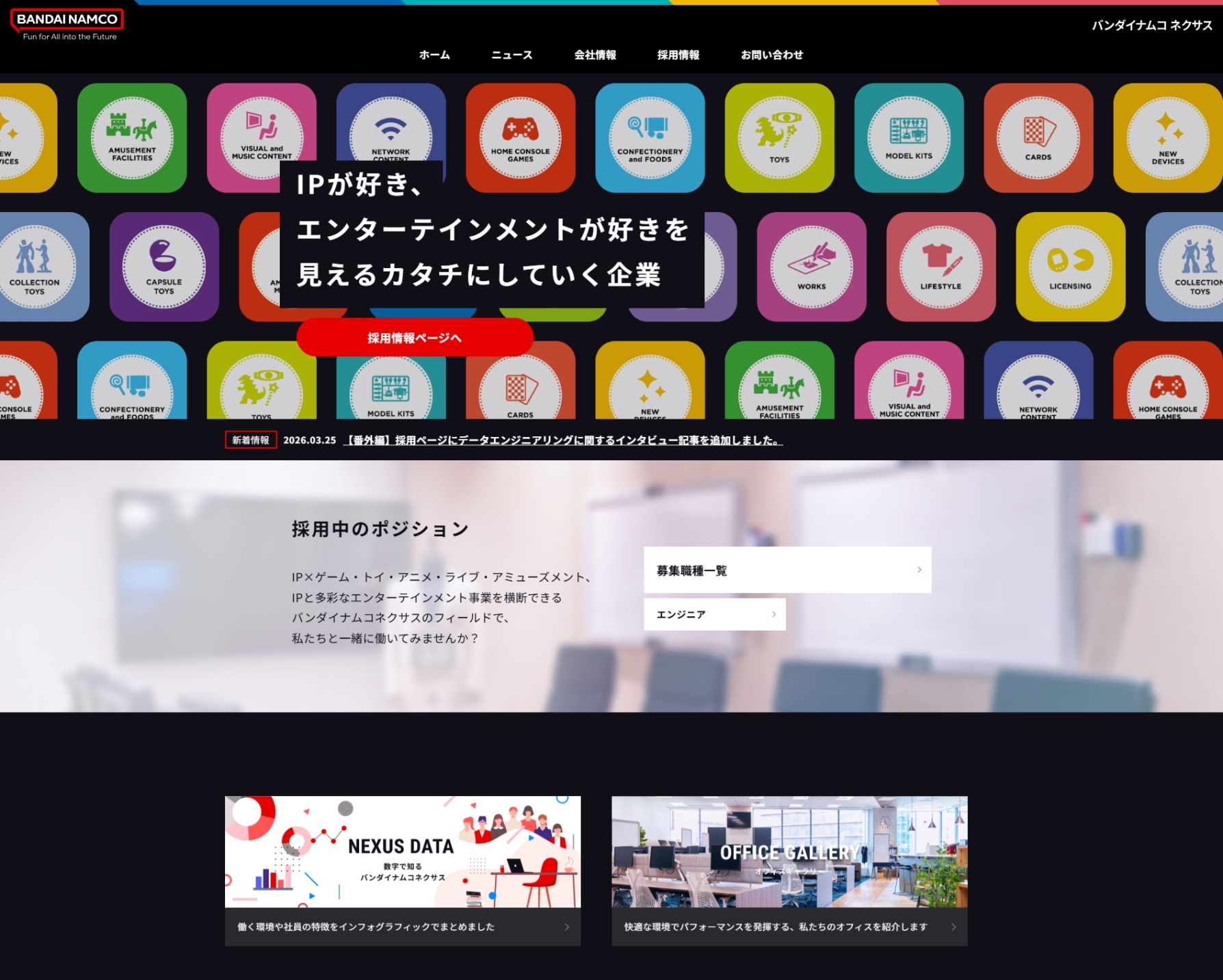
The role of Bandai Namco Nexus extends beyond simply sharing successful case studies. Unsuccessful initiatives are also treated as valuable sources of data.
By analyzing why certain projects failed, the company seeks to prevent other business units from repeating the same mistakes. This ability to “learn from failure” has become another important aspect of how data is utilized across the group.
What distinguishes the Bandai Namco Holdings Group’s approach is that it is not centered on pursuing increasingly sophisticated analytical technologies for their own sake. Instead, everything begins with practical problems faced in the field.
The process starts by identifying challenges, visualizing them through data, implementing improvements, and then sharing those lessons across other businesses and projects. Within that process, data serves as a tool that makes it easier to formulate the right questions and improve the accuracy of decision-making.
Data does not automatically produce answers on its own. However, it can reveal where problems exist and where deeper investigation is needed.
In many ways, that practical and problem-oriented use of data represents the true essence of how the Bandai Namco Group approaches data utilization.
Chapter.02
Viewing the Global Market as One Connected Audience
When companies think about global expansion, the discussion is often centered around “localization” — adapting products and strategies separately for Japan and overseas markets. However, the Bandai Namco Holdings Group approaches the issue somewhat differently.
According to Koji Tezuka, the company does not fundamentally separate Japanese and overseas audiences. Instead, it views them collectively as fans who enjoy the same intellectual property.
In other words, rather than dividing products into “for Japan” and “for overseas,” the company begins by asking how it can deliver value to fans around the world who share a passion for the same IP. Differences between regions are then understood and addressed within that broader perspective.
At the same time, data analysis clearly reveals that significant differences exist across countries and regions, even when audiences are engaging with the exact same content.
For example, in the trading card game business, entirely different deck-building trends sometimes emerge between Japan and overseas markets despite players using the same cards. These differences are not simply matters of preference, but reflect deeper differences in how people want to play and experience the game itself.
Even more interestingly, Tezuka explains that these differences are influenced not only by current tastes, but also by childhood experiences.
The anime people grew up watching and the games they played when they were younger continue to shape their behavior and preferences later in life. In other words, current behavioral data alone cannot fully explain these differences. Understanding them requires looking at the accumulation of experiences behind the data as well.
These kinds of insights cannot be uncovered through surface-level analytics alone.
Instead, data becomes the starting point for asking deeper questions: Why do these differences exist? What cultural or experiential factors are shaping them?
From there, the company combines quantitative analysis with interviews conducted by local staff and direct conversations with users in each market in order to better understand the context behind the numbers.
In this sense, the key process involves continuously moving back and forth between data and qualitative understanding, gradually increasing the resolution and depth of insight into global fan behavior.


How, then, does the Bandai Namco Holdings Group respond to the cultural differences it identifies through this process?
What is particularly interesting is that the company does not dramatically redesign products for each market. Instead, it adjusts the overall balance within the product lineup itself.
In the trading card business, for example, one market may prefer bold and powerful visual expressions, while another may place greater value on artistic illustration and aesthetic composition. Rather than creating completely different products tailored to each country, the company adjusts the proportion and balance of these elements across the overall product offering.
This philosophy of “not over-localizing” is one of the group’s defining characteristics.
According to Koji Tezuka, maintaining the core worldview and identity of an IP while simultaneously responding to regional preferences — and carefully balancing the two — is essential for successful global expansion.
These approaches to data utilization and cultural understanding influence not only product development, but the company’s broader business strategy as well.
Decisions such as which IPs to strengthen in specific regions and when to launch particular initiatives are increasingly guided by a combination of data analysis and deeper cultural understanding.
Chapter.03
Understanding Fans with Greater Precision to Grow Both Business and Talent
Another important philosophy underpinning the business of the Bandai Namco Holdings Group is its approach to “increasing the resolution” at which it understands fans.
The company does not treat “fans” as a single, uniform category. Some people are passionate about the IP itself, while others are more strongly attached to specific product experiences such as trading card games. Preferences also vary significantly depending on age, region, and personal interests.
This is where data becomes particularly valuable.
By segmenting fans in greater detail and analyzing their needs and characteristics, the company can more precisely understand what different audiences are seeking. Data helps increase the “resolution” with which fans are viewed.
At the same time, however, the more precisely audiences are segmented, the smaller each target group becomes. This makes it easier to create products that deeply resonate with specific fan communities, but it also raises questions about whether those businesses can achieve sufficient scale.
As a result, balancing investment across different fan segments becomes critically important.
Areas with both strong market potential and highly passionate fans receive larger investments, while smaller but promising communities may be gradually nurtured over time. In some cases, the company leverages its ability to produce smaller-scale releases tailored to highly dedicated core fans. Data is used throughout this process not only to understand audiences more deeply, but also to help design sustainable business strategies around them.
Being a fan of the content itself also plays an important role in talent development and recruitment.
At Bandai Namco Nexus, individuals who possess not only strong analytical skills but also a deep understanding of and passion for entertainment content are especially well positioned to thrive. The company attracts people who are motivated by the opportunity to work on franchises they personally love and to influence the future of those works.
That passion, in turn, enables deeper customer understanding and more meaningful proposals.
Tezuka also emphasizes that across the entertainment industry as a whole, what matters most is not necessarily extraordinary technical ability, but genuine passion and the desire to share something meaningful with audiences.
The ability to feel that people around the world are being moved or delighted by something you helped create is, he says, one of the industry’s greatest rewards.
The Bandai Namco Holdings Group also actively collaborates with companies and industries outside its own organization.
Rather than trying to do everything internally, the company believes partnerships can expand creative and business possibilities.
For example, the group has previously opened some of its IP assets to external companies for collaborative use. It has also developed products combining its entertainment IP with the technical expertise of small-scale Japanese manufacturers and factories.
Because content production naturally involves large networks of creators, studios, and partner companies, the production process itself often leads organically to new collaborative opportunities.
Tezuka describes the content industry as “surprisingly open,” noting that entertainment content has the ability to connect with a wide variety of industries and fields.
Ultimately, the company believes that deeply understanding fans and continuously responding to their expectations is what supports the long-term expansion of its business around the world.
Toward the end of the interview, Tezuka also offered an interesting perspective on the relationship between global expansion and tourism to Japan.
A common assumption is that international fans first discover Japanese content overseas, then visit Japan for a special experience, and later continue consuming related products in their home countries. However, Tezuka explains that the company does not view inbound tourism revenue itself as the primary objective.
What matters most is whether those experiences deepen fans’ emotional connection to the content and encourage them to remain engaged with it over the long term.
Experiencing Japan is one important touchpoint, but it is not the only one. Since traveling to Japan still remains difficult for many overseas fans, the company believes it is equally important to create opportunities for comparable experiences within local markets abroad.
In practice, the company already provides such opportunities through overseas events, exhibitions, and experiential programs that allow fans to engage directly with Japanese content in their own countries.
Because not every fan can travel to Japan, creating “places where fans can experience the content locally” has become an essential part of building long-term global relationships.
What ultimately emerges from this interview is that the Bandai Namco Holdings Group’s business is not centered simply on selling content, but on continuously deepening relationships with fans.
Data utilization exists to support that goal, and global expansion is positioned within the same philosophy.
The key question is not where products are sold, but rather to whom — and what kind of experiences are being delivered.
Japanese entertainment content has already spread across the world. To further strengthen its value, companies must continue deepening their understanding of fans and building long-term relationships with them.
The Bandai Namco Group’s approach offers one compelling example of how that can be done.
Written by Yoshiyasu Suzuki
Interview conducted on March 24, 2026
Please note that the information in this article, including the interviewee’s affiliation and title, is accurate as of the interview date.