


NEW Article
-

Kita-Kanto
7 Become a Kurabito. Enhancing the Value of Japanese Sake through a New Form of Sake Brewery Tourism
KURABITO STAY and Kitsukura Shuzo have teamed up to offer a completely new sake tourism program within the grounds of a 330-year-old sake brewery. This new program enables visitors to stay at a renovated, century-old lodging that was used by former kurabito, or sake brewers, at the Kitsukura Shuzo sake brewery in Saku, Nagano Prefecture. In addition to enjoying locally produced sake and delicious local dishes during their stay, guests can take part in the sake brewing process. It is an activity that fans of Japanese sake will want to experience at least once. Held on weekends only, since its launch in March 2020, the special program has been so popular among guests that some have even come back for more. KURABITO STAY, Inc. is the company responsible for developing and running the program. President Marika Tazawa’s aim is to boost sake-related tourism, engage in new branding activities for sake breweries, and promote tourism that brings joy to everyone involved.
Read more -

1 The Future of the UNWTO’s Gastronomy Tourism Initiatives
According to a survey by the World Tourism Organization (UNWTO), in recent years, the number of tourists who prioritize experiencing the regional lifestyles and cultures of their destination by enjoying the local cuisine is increasing at around the same rate as those who visit tourist hotspots. These tourists have a strong desire for authenticity and tend to consume more than the average tourists. Gastronomy tourism is defined as “A form of tourism that aims to experience the local culinary culture and to enjoy food nurtured by the ingredients, culture, customs, traditions and history created by the local climate.” In today’s post-COVID-19 society, overtourism and other tourism issues prior to the pandemic have made initiatives for the SDGs more important, while awareness of the importance of sustainable tourism—in terms of the economy, society, culture and environment—is gradually increasing. Gastronomy tourism is closely linked to the local natural environment, agriculture and culture. Further, gastronomy tourism, which anyone can participate and which contribute to participants’ health and happiness, can be considered an effective way for achieving sustainable tourism. Moreover, the origins of many types of cuisine can be found in the local history and culture. Food is therefore an ideal contents to highlight a region’s characteristics, and can be one of the great pleasures of travel. In a survey conducted by the Japan Tourism Agency, the primary attraction for foreign tourists visiting Japan was “eating Japanese food”, while in sixth place was “drinking Japanese sake”. As a result of the above, local governments around Japan are proactively engaging in gastronomy tourism initiatives to achieve regionaldevelopment. The UNWTO lists the following five reasons for the focus on gastronomy tourism: (1) It is an effective way for regions to differentiate themselves; (2) it can provide visitors new values and experiences; (3) it can be initiated even in regions with few tourism resources; (4) it is conducive to tell regional stories; and (5) it promotes tourists to revisit. Below are three initiatives led by the UNWTO for gastronomy tourism. The first is a report that the UNWTO published in 2019 called Gastronomy Tourism – The Case of Japan. This report features 18 excellent examples of gastronomy tourism activities in Japan. The report follows a survey of Japan’s 1,741 municipalities, of which 584 responded. It shows that gastronomy tourism activities in Japan are more comprehensively focused on sustainable regional development and collaboration with agriculture than tourism promotion […]
Read more -


Hokuriku
2 Brewing the Future of Sake
“If we let ourselves be too restricted by the perceived value of traditions worth preserving, we will be unable to move forward, and we will remain stagnant,” says Ryuichiro Masuda, the fifth head of Masuda Sake Brewery in Toyama Prefecture. Masuda is also a collaborator in the groundbreaking IWA sake project founded by Richard Geoffroy, who served as the fifth chef de cave (cellar master) of Dom Pérignon. Sake has a history of over a thousand years, but Masuda believes that the industry suffers from “a lack of branding power and strategy.” His business philosophy of “Do what needs to be done right now” has guided his efforts in big projects now coming to fruition: the IWA project, which is breathing a fresh sense of value into sake, and a town revival project to attract artists, breweries, and exciting new shops to the beautiful old neighborhood of Iwase, where he grew up, in the city of Toyama.
Read more -
Minami-Kanto
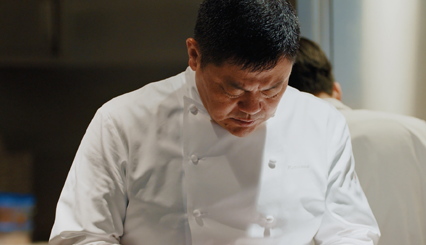
1 Developing the Potential of Japan’s Satoyama Culture
Yoshihiro Narisawa, the owner-chef of restaurant NARISAWA in Minami-Aoyama, Tokyo, is one of Japan’s world-class chefs and an artist dedicated to crafting a variety of innovative food creations. For more than 20 years, Narisawa has been focused on the culture found in rural foothill villages of Japan, called satoyama culture, where people coexist closely with nature. He explores the rich food culture and the ancestral wisdom passed down there, and expresses it through his uniquely creative cooking style—establishing a new genre he calls “innovative satoyama cuisine.” His work demonstrates his philosophy of “beneficial and sustainable gastronomy,” environmentally-conscious gourmet dining that shows respect for nature while nourishing body and mind. Narisawa shows his commitment to preserving satoyama culture through his activities in Japan and around the world, and by sharing his message, as he continues to search for the ideal future of food culture.
Read more
記事検索
キーワードから探す
- すべて
- Ryotei & Restaurants
- Lodging/Hotels
- Producers
- Technology
- DX (Digital) & SNS
- City Planning
- Utilization
- Gastronomy and Culinary
- Japanese Nature
- Japanese history and traditional culture
- Japanese Food Culture
- Agriculture
- Fisheries
- SDGs
- Local production for local consumption
- Foreigner Activation
- Experience
- Overseas Expansion
- Fermentation
- Public-private partnerships and collaborations
- Sake
- Community Revitalization
- Spirituality
- Japan of the Sea
- Mountain Japan