


NEW Article
-

20 FY2025 6th CJPF LAB ”Finance & Regional Revitalization × Cool Japan”
The 6th CJPF LAB of this fiscal year was held under the theme of “Finance & Regional Revitalization × Cool Japan.” Three guest speakers were invited: Kotaro Omae, Chairman of Johoku Shinkin Bank; Naohisa Kawamura, Senior Managing Executive Officer of Cool Japan Fund, Inc. and Takami Kondo, Vice Chairman & Representative Director of SBI NEO MEDIA HOLDINGS Co., Ltd. / President & Group Representative of NEXYZ.Group. The moderator was Kenichi Watanabe, Director of the Cool Japan Public-Private Partnership Platform (CJPF). The event gathered a large number of participants both in-person and online, and generated lively discussion about insights from financial professionals engaged in Cool Japan, along with practical case studies. (Event date: March 3, 2026) Kotaro Omae | Chairman, Johoku Shinkin Bank Mr. Omae spoke on the topic of “Challenging Content Development to Enhance Regional Value.” He began by classifying financial institutions’ activities into “traditional financial services” and “non-financial services,” then explained the background behind Johoku Shinkin Bank’s focus on community engagement. As a non-profit cooperative financial institution, the bank can leverage its ability to take a long-term view on investment decisions, and has been pursuing content development directly linked to enhancing regional value. As a specific example, he first introduced the creation of a sake brand set in Kita Ward, Tokyo. The ward has a history of being called the “Sacred Land of Sake,” symbolized by the former National Brewing Laboratory (Red Brick Sake Brewery), a nationally designated Important Cultural Property. During the Sino-Japanese and Russo-Japanese Wars, over 3,000 master brewers (toji) gathered there from across the country to acquire the latest sake-making techniques—all in service of securing liquor tax revenue to fund the war effort. As chairman of the tourism association, Mr. Omae promoted the use of this facility and organized tours combining a facility visit with a full-course French dinner featuring fermented ingredients (approximately 50,000 yen per person), which sold out immediately. This experience strongly convinced him of the potential of heritage tourism. Building on these experiences, in 2024 he launched a sake called “HIEI” brewed using the “Asukayama yeast” collected from the former Shibusawa Garden in Asukayama Park, priced at 10,000 yen per bottle and limited to 2,024 bottles. It sold out and went into increased production. It has since been listed at Michelin-starred restaurants and the Imperial Hotel, becoming a high-value-added brand. Products such as caneles and ice cream made from sake lees are also […]
Read more -
19 FY2025 Fifth CJPF LAB: Growing Cool Japan Together — ‘The Japan We Want to Share’ Through the Eyes of International Talent
Speakers & Presentation Topics Adam Fulford, CEO of Fulford Enterprise Co., Ltd., who has lived in Japan for more than 40 years and has long worked on translation and supervision for Japanese television programs related to English language education, spoke about one of the “invisible assets” of Japanese culture: the spirit of consideration for others and cooperation with those around you. He explained that this mindset of “caring for others” is becoming less common overseas and is perceived by many foreigners as a uniquely valuable aspect of Japanese culture. Mr. Fulford pointed out that regional areas of Japan—where traditional Japanese culture and ways of thinking remain especially strong—hold tremendous potential for attracting inbound tourism. He outlined three major benefits that foreign visitors can bring to local communities. First is the direct economic impact through tourism consumption. Second is exposure to highly skilled and specialized individuals. By welcoming visitors with perspectives and expertise rarely encountered in everyday local life, regional communities can gain new inspiration and opportunities. Third, he emphasized the advantage local communities have in being able to “selectively adopt outside ideas with flexibility.” Regions do not need to accept every suggestion brought from abroad; instead, they can choose and incorporate only the ideas that best fit their local vision. He described this ability to “take the best parts” as one of the unique advantages of inbound tourism. At the same time, Mr. Fulford highlighted challenges in Japan’s intercultural communication. Although Japan possesses a culture centered on consideration for others, he argued that many translations seen in regional areas are not truly created “with the audience in mind.” While translations may be grammatically correct in Japanese terms, they are often written from a Japanese perspective and therefore fail to resonate with international audiences. He stressed the importance of transforming such language into words that genuinely “speak to the hearts” of people from the perspective of the intended audience. Finally, he introduced the concept of “contribution-based tourism” as a framework for co-creation with international visitors. Rather than tourists simply consuming local attractions, he proposed organizing decentralized international conferences in which participants stay for several days in different regional communities, discovering both local strengths and challenges. At the end of the journey, all participants would gather to share ideas and proposals, some of which could potentially be adopted as valuable contributions to regional development. Mr. Fulford suggested that such initiatives could help […]
Read more -
18 FY2025 Fourth CJPF LAB: The Current State of Global Expansion in Fashion and Beauty
Representatives from the fashion and beauty industries—both key sectors within the Cool Japan ecosystem—delivered presentations featuring concrete case studies from companies with distinctive strengths in global expansion strategies.(Date: February 12, 2026) Speakers & Presentation Topics Philippe Terrien, founder of DAMDAM, delivered the opening presentation, introducing DAMDAM as a Japan-born brand created specifically for a global audience. He discussed the background behind the company’s establishment, its product development based on global standards, and the challenges faced by Japanese brands in the international market. Mr. Terrien explained that while Japan possesses a rich history of cosmetics and access to many high-quality natural ingredients, these strengths are often underutilized. He noted that the lack of storytelling rooted in Japan’s deep cultural heritage represents a missed opportunity. DAMDAM, he said, was created to bring these uniquely Japanese values and stories to audiences around the world through both product development and branding. He also introduced initiatives focused on discovering locally sourced ingredients hidden in regional areas of Japan and collaborating with local communities to cultivate raw materials on unused farmland. Through these efforts, the company has established unique ingredient supply chains and production routes while simultaneously contributing to regional revitalization through mutually beneficial partnerships. In addition, Mr. Terrien shared his experiences of increasingly being invited to speak at overseas events since last year (2025). However, he noted that he was often the only representative from a Japanese brand, and in some exhibitions, the sole Japanese exhibitor was placed within a Korean pavilion area. He expressed disappointment at the limited global presence of Japanese brands and shared his strong hope that far more Japanese companies will expand internationally in the future. Naohiko Matsuura, Executive Vice President and COO of CFCL Inc., then introduced the company’s business initiatives and approach to international expansion. Mr. Matsuura explained that the traditional fashion industry has long relied on a labor-intensive model in which mass production shifts from one low-wage country to another in pursuit of lower manufacturing costs. In contrast, CFCL is pursuing a new production model centered on knitwear manufacturing methods that can operate even in small factories with specialized equipment, making production feasible in developed countries including Japan. He emphasized that, because the same products can be manufactured locally in different countries as long as the necessary equipment is available, this model offers additional value and flexibility beyond conventional production systems. He also noted that because CFCL produces […]
Read more -
17 FY2025 Third CJPF LAB: The Current State and Future of Enhancing Value Through Collaboration with IP
The third CJPF LAB session of FY2025, which received a record-high approximately 300 applications, welcomed guest speakers from Aniplex Inc., a company engaged in IP business development, and TOPPAN Inc., which serves as a bridge connecting IP with diverse industries. The event provided valuable presentations from each company’s perspective, offering insights into expanding initiatives that enhance value through collaboration between Japanese content and other industries.(Date: December 19, 2025)
Read more -
16 FY2025 Second CJPF LAB: The Potential of Sports × Cool Japan
The Cool Japan Public-Private Partnership Platform regularly hosts CJPF LAB study sessions as a forum for companies and experts interested in overseas expansion strategies for Cool Japan-related industries to share information and exchange ideas. By bringing together pioneers of Cool Japan across various fields, as well as successful case studies from global perspectives, the program promotes the sharing of expertise among platform members and CJ Producers, while also aiming to support business expansion and create opportunities for collaboration among stakeholders involved in Cool Japan initiatives.The second session of FY2025, titled “The Potential of Sports × Cool Japan,” featured experts from various fields who delivered presentations exploring the future of Cool Japan through the lens of sports. Topics included anime, intellectual property, the economy, technology, and global expansion, offering multifaceted perspectives on the role of sports in advancing Cool Japan strategies.(Date: October 10, 2025)
Read more -
15 Cool Japan Frontier toward 2033
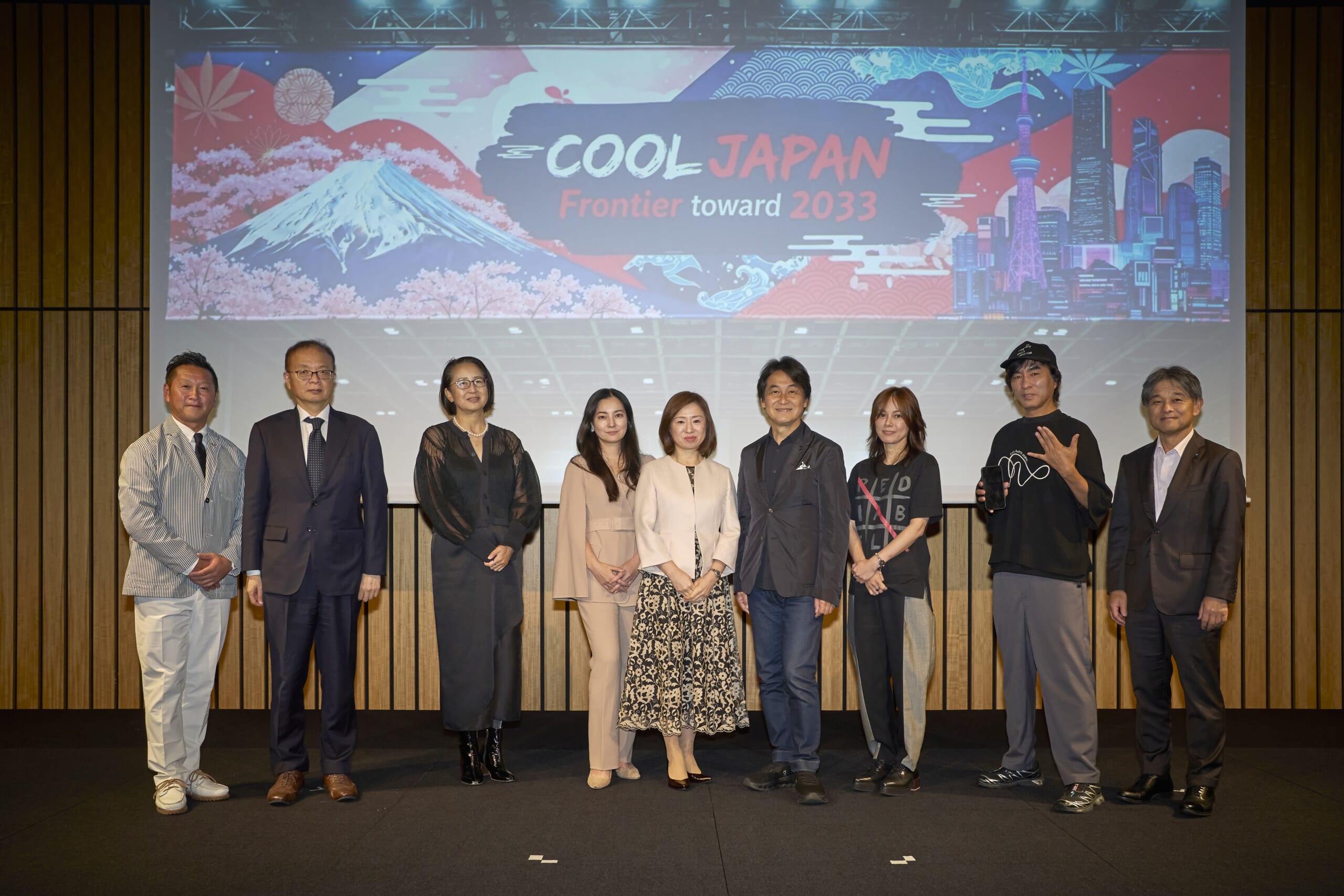
The Cool Japan Public-Private Partnership Platform of the Cabinet Office of Japan held “Cool Japan Frontier toward 2033” on Friday, October 3, 2025, at the Akasaka Intercity Conference in Tameike-Sannō, Tokyo. Messages looking ahead to 2033 were delivered by Minoru Kiuchi, Minister of State for “Cool Japan” Strategy, as well as Tsuyoshi Natsuno and Risa Tanaka, co-chairs of CJPF. The event also provided opportunities for networking among participants. Please note that the contents of this article reflect information available at the time of the event. Minoru Kiuchi, Minister of State for “Cool Japan” Strategy, emphasized that Cool Japan initiatives span a wide range of fields—including content, food, inbound tourism consumption, fashion, and cosmetics—and involve a diverse range of stakeholders, making cross-sectoral and organic collaboration essential. He also noted that the Cool Japan Public-Private Partnership Platform, established in 2015, has been relaunched this year under a new organizational structure. He expressed his appreciation for the leadership of co-chairs Tsuyoshi Natsuno and Risa Tanaka, as well as for the participation of the Executive Directors. Referring to the Intellectual Property Strategic Program 2025, Minister Kiuchi stated that the initiative aims to leverage regional resources—such as local food culture and traditional culture connected to content IP—to accelerate integrated regional efforts, thereby creating a positive cycle between the growth of the content industry and the revitalization of local economies. He concluded his remarks by reaffirming the commitment to further promoting the Cool Japan strategy to audiences around the world. Tsuyoshi Natsuno, Co-Chair, Cool Japan Public-Private Partnership Platform Specially Invited Professor and Director of Cyber Informatics Research Institute, Kindai University, stated that Japan’s content industries—including manga, anime, and video games—have experienced remarkable global growth following the COVID-19 pandemic. He noted that export revenues in the previous fiscal year reached ¥5.8 trillion, surpassing both the semiconductor and steel industries to become Japan’s second-largest export industry after automobiles. Looking ahead to 2033, he explained that the goal is for the overall Cool Japan industry to grow into a ¥50 trillion market, with the content industry accounting for ¥20 trillion of that total. He emphasized that this would exceed the scale of Japan’s ¥20 trillion automotive industry, opening the way for content to become one of the country’s core industries. Risa Tanaka, Co-Chair, Cool Japan Public-Private Partnership Platform President, The Graduate school of Project Design, presented two major themes. First, she highlighted the goal of expanding the overseas market […]
Read more -
14 “FY2025 First CJPF LAB: Exploring the Potential of Nighttime Cool Japan Through Technology”
Leading experts from the fields of drone shows and projection mapping gave presentations on regional revitalization initiatives utilizing these two cutting-edge technologies, sharing concrete case studies from their respective industries.
Read more -
Shikoku
38 Turning Dispersed Regional Resources into Collective Value
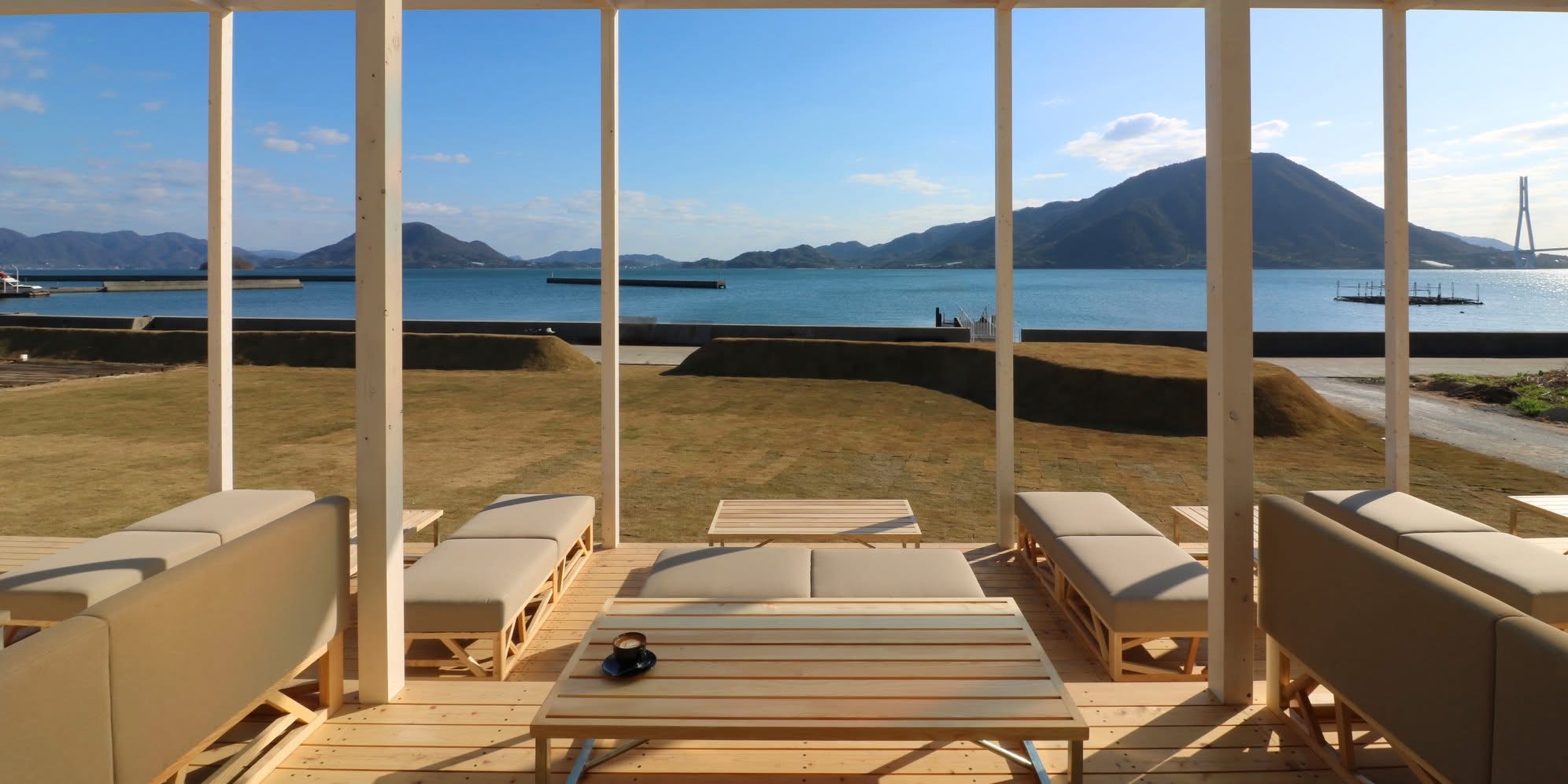
Enhancing Experiential Value in Regional Communities: Lessons from Ehime In regional tourism, initiatives limited to standalone facility development or one-off events often fail to encourage visitors to explore surrounding areas or extend their stays. As a result, such efforts can struggle to generate sustainable value or stimulate broader local consumption across the region. In Ehime Prefecture, tourism is being viewed not merely as a tool for attracting visitors, but as a means of redesigning the value of entire communities. Across the prefecture, a number of forward-looking initiatives have emerged that focus on improving circulation between areas and enhancing the overall value of the visitor experience on a regional scale. This article highlights four case studies—Ozu, Dogo Onsen, Shimanami Kaido, and Omishima—to explore how different regions are organically connecting multiple local resources and destinations in order to design richer experiential value for the community as a whole.
Read more -
Minami-Kanto
39 Expanding Globally Together with Fans Worldwide: How the Bandai Namco Group Leverages Data to Drive Global Growth
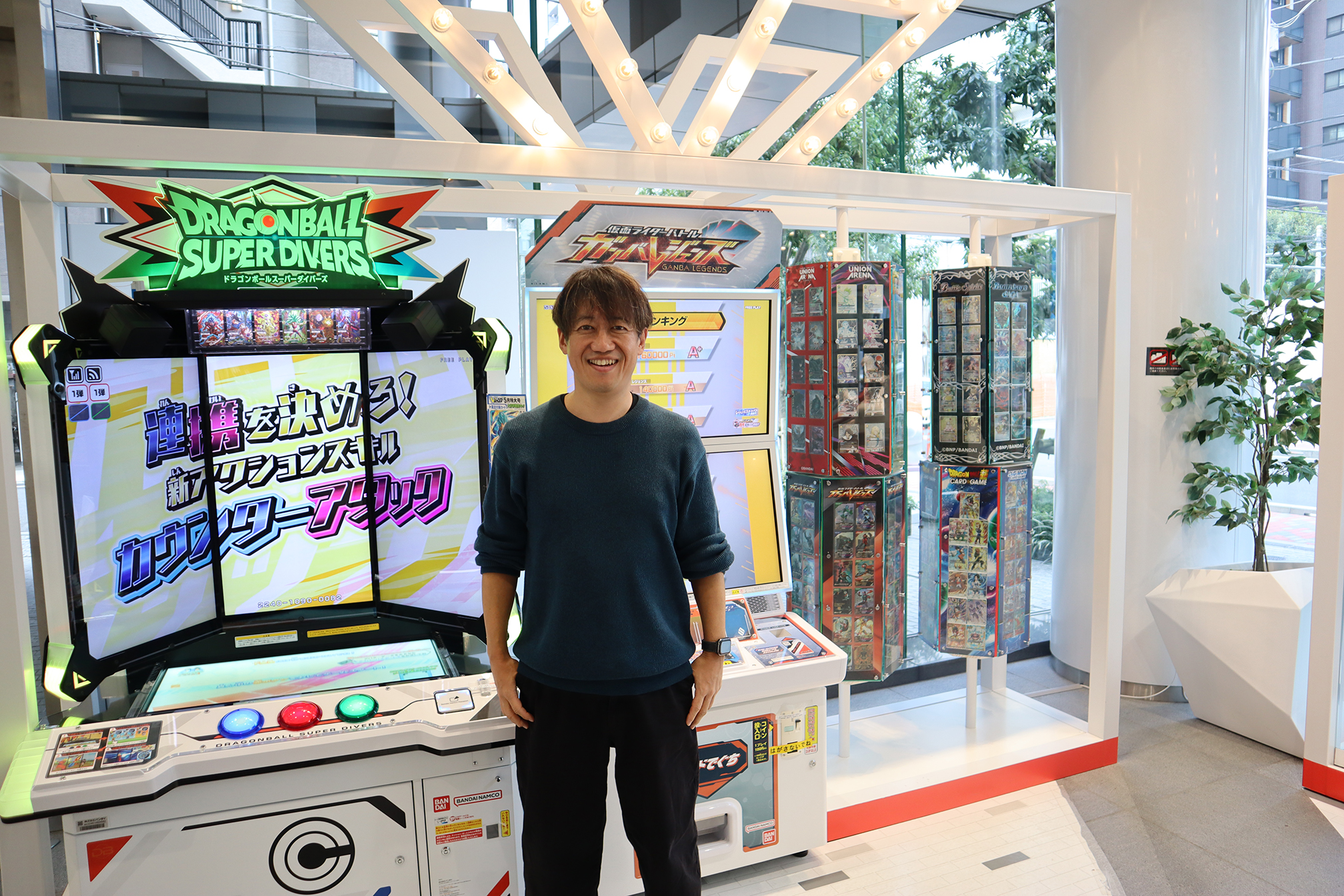
As Japanese content continues to expand globally, one question is once again coming into focus: how should creators and companies engage with fans around the world? Anime, games, and character merchandise are already beloved internationally, yet the ways they are received can vary greatly depending on the country or region. Simply applying strategies that succeeded in Japan does not necessarily guarantee success overseas. So how should companies approach global markets, and how can they build meaningful relationships with fans worldwide? We spoke with Koji Tezuka, Executive Officer of [Bandai Co., Ltd.](https://www.bandai.co.jp/?utm_source=chatgpt.com), part of the globally expanding [Bandai Namco Group](https://www.bandainamco.co.jp/?utm_source=chatgpt.com), which develops and distributes some of Japan’s most iconic IP content worldwide. In this interview, he shares insights on data utilization, international business expansion, and the importance of fans and talent in building a global presence.
Read more -

Hokkaido
37 From Sunagawa, Hokkaido to the World: How SHIRO Is Building a Global Beauty Brand Through Regional Co-Creation and Sustainable Growth
SHIRO is a cosmetics brand that continues to captivate fans in Japan and around the world through products crafted from natural ingredients sourced across Japan. Originally founded in 2009 in Sunagawa, Hokkaido under the name “LAUREL,” the brand was renamed “shiro” in 2015 and later “SHIRO” in 2019, reflecting its growing global ambitions. Driven by founder Hiroe Imai’s passion for creating cosmetics, together with the management expertise of President and CEO Takahiro Fukunaga, who joined the company in 2014 after a career at [Recruit Holdings](https://www.recruit.co.jp/?utm_source=chatgpt.com), the company has expanded into the UK, Taiwan, and South Korea. Today, SHIRO is setting its sights on a new stage of globalization—one rooted in regional co-creation and localization that faithfully communicates the essence of the brand.
Read more
記事検索
キーワードから探す
- すべて
- Ryotei & Restaurants
- Lodging/Hotels
- Producers
- Technology
- DX (Digital) & SNS
- City Planning
- Utilization
- Gastronomy and Culinary
- Japanese Nature
- Japanese history and traditional culture
- Japanese Food Culture
- Agriculture
- Fisheries
- SDGs
- Local production for local consumption
- Foreigner Activation
- Experience
- Overseas Expansion
- Fermentation
- Public-private partnerships and collaborations
- Sake
- Community Revitalization
- Spirituality
- Japan of the Sea
- Mountain Japan